jsonformer vs xgrammar
Structured language model output tools compared
jsonformer and xgrammar both help language models produce structured output for applications. jsonformer inserts predictable JSON structure while a Hugging Face model generates values; xgrammar constrains decoding with JSON, regular expression, or context-free grammar rules.
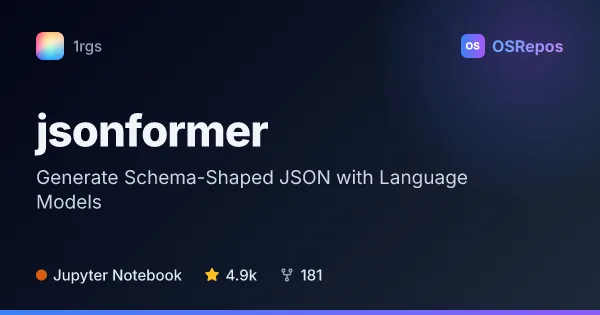
jsonformer: Generate Schema-Shaped JSON with Language Models
Jsonformer guides Hugging Face language models to produce JSON matching a supported schema by supplying predictable structural tokens itself. It may suit Python projects needing structured output, but the repository has been inactive for over a year.
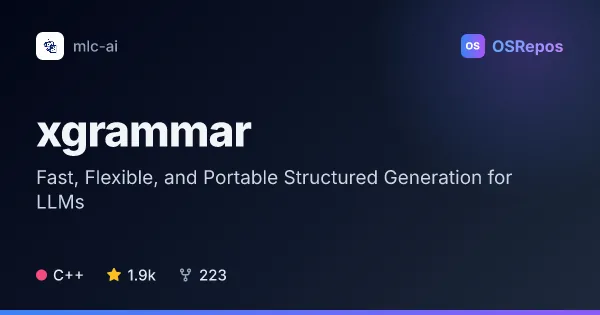
xgrammar: Constrain Language Model Output to Structured Formats
XGrammar is a library for constrained decoding that helps language models produce outputs matching JSON, regular expressions, or context-free grammars. It suits teams integrating structured output into LLM inference and applications that need reliable machine-readable responses.
| jsonformer | xgrammar | |
|---|---|---|
| Language | Jupyter Notebook | C++ |
| License | MIT | Apache-2.0 |
| Stars | 4.9k | 1.9k |
| Forks | 181 | 223 |
| Last analyzed | Oct 12, 2026 | Oct 3, 2026 |
Key differences
- jsonformer supports a subset of JSON Schema types, while xgrammar supports JSON, regular expressions, and custom context-free grammars.
- jsonformer wraps models using the Hugging Face Transformers interface; xgrammar is designed to integrate with inference engines including vLLM, SGLang, TensorRT-LLM, and MLC-LLM.
- jsonformer is written in Jupyter Notebook and is MIT-licensed; xgrammar is written in C++ and is Apache-2.0-licensed.
- jsonformer describes a Python wrapper, while xgrammar provides APIs for Python, C++, JavaScript, and Swift.
- jsonformer has 4.9k stars and 182 forks; xgrammar has 1.9k stars and 223 forks.
Choose jsonformer if you…
- need JSON objects or arrays using jsonformer’s supported schema types.
- want a wrapper for Hugging Face Transformers models.
- prefer a project with an MIT license.
Choose xgrammar if you…
- need constraints for regular expressions or custom context-free grammars as well as JSON.
- want a component designed to integrate with LLM inference engines.
- need APIs for Python, C++, JavaScript, or Swift.
Compare the numbers side by side, or add more projects
This comparison is generated with AI from the OSRepos analyses of both projects. Always check each project's repository and documentation before choosing.