Repository History
Explore all analyzed open source repositories
Codeg: Collaborative Multi-Agent AI Coding Workspace for Developers
Codeg (Code Generation) is an innovative multi-agent AI coding workspace built in Rust, designed to unify and enhance the developer experience. It aggregates sessions from various AI coding agents like Claude Code, Codex, and Grok Build into one searchable environment, facilitating seamless collaboration and task management. Available as a desktop app, self-hosted server, or Docker container, Codeg also offers native iOS and Android clients for on-the-go productivity.
Vicoa: Agentic IDE for Orchestrating Coding Agents Across Devices
Vicoa is an open-source, self-hostable agentic IDE designed to orchestrate a team of coding agents. It enables developers to run and steer multiple AI agents from various devices, including desktop, mobile, and remote servers, providing a unified command center for development workflows.
CCCC: Coordinate Your Coding Agents Like a Group Chat
CCCC is a production-minded orchestrator designed to coordinate coding agents like a group chat, offering features such as read receipts, delivery tracking, and remote operations from your phone. It enables 24/7 workflow for multi-agent teams with a single `pip install` and zero infrastructure. This tool helps manage diverse AI runtimes, ensuring persistent collaboration across different machines and trusted working groups.
Benchmark Radar: A Living Database for AI Benchmarks and Evaluation
Benchmark Radar is an extensive open-source project that tracks over 20,710 AI benchmark, evaluation, dataset, and data-quality records from 37 public sources. It provides daily updates, linked evidence, and tools for researchers and developers to discover and analyze AI benchmarks. This project is essential for anyone needing to stay current with AI evaluation trends and model performance.
AI Session Search: Ultra-Fast AI Agent Session Analysis
AI Session Search (aise) is an ultra-fast, Rust-powered tool designed for searching and analyzing local AI agent coding sessions. It seamlessly integrates and indexes nine different session formats, including those from Claude, Codex, Cursor, and Gemini CLI. This powerful utility enables developers to quickly recover context, track agent behavior, and efficiently manage their AI-generated code history.
e2a: Open-Source Email API for Applications and AI Agents
e2a is an open-source email API designed for applications and AI agents, offering robust transactional email capabilities and real two-way inboxes. It supports both managed hosting and self-hosting with Docker, providing features like human-in-the-loop approval and advanced content screening. Built in Go, e2a aims to bridge email's universal addressability with the structured data world of AI agents.
Pydantic AI Harness: Enhancing Your AI Agents with Robust Capabilities
Pydantic AI Harness is the official capability and harness library for Pydantic AI, designed to extend agents for complex, long-running tasks. It provides a modular system of "capabilities" for functionalities like file system interaction, web research, memory, and sub-agent delegation. This library enables developers to build sophisticated and durable AI agents with ease.
Bernstein: Open-Source Governance and Orchestration for AI Agents
Bernstein is an open-source framework designed for the governance and orchestration of AI agents, allowing users to define rules declaratively. It enforces these policies and generates verifiable, replayable records of all agent activities. This Python-based solution provides a robust layer for managing complex AI agent workflows with transparency and accountability.
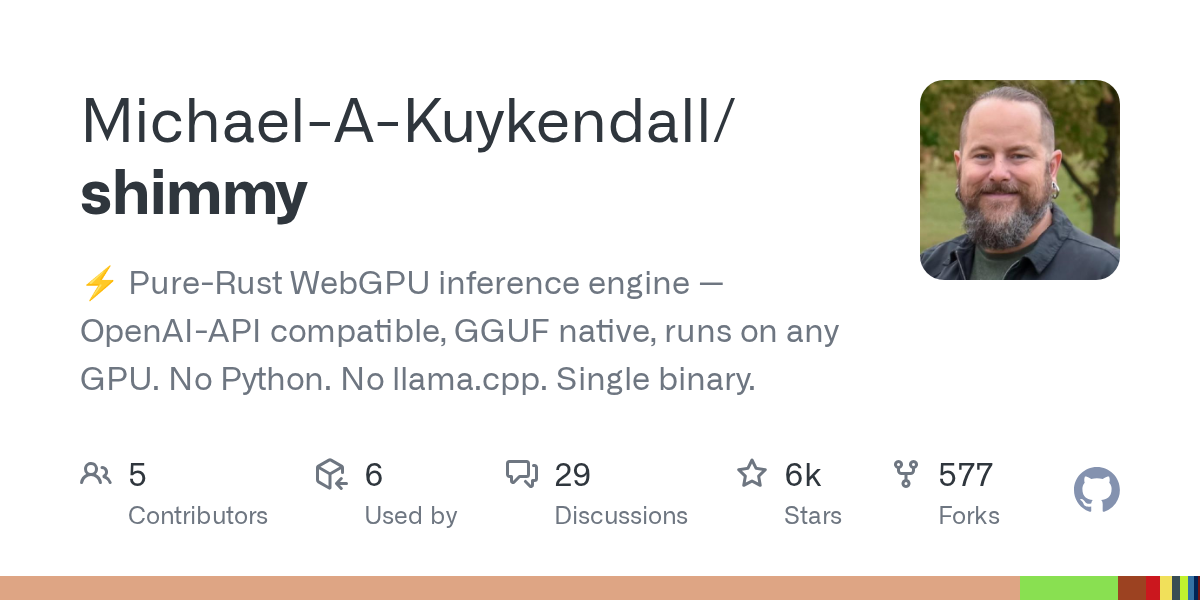
Shimmy: A Pure-Rust WebGPU Inference Engine for GGUF Models
Shimmy is a high-performance, pure-Rust WebGPU inference engine designed for GGUF models. It offers OpenAI-API compatibility, enabling local and private execution of large language models without Python or C++ dependencies. This single-binary solution provides rapid startup and a low memory footprint, making it an efficient alternative for local AI inference.
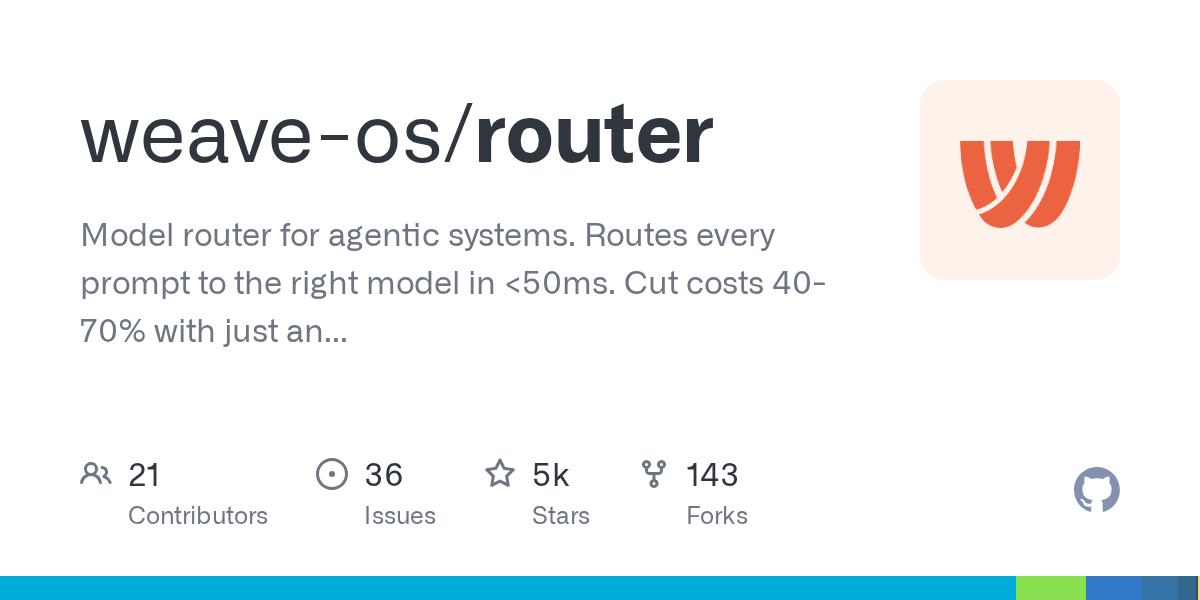
Router: Optimize AI Model Selection and Costs for Agentic Systems
The Weave-OS Router is an intelligent model router for agentic systems, optimizing AI model selection for every request. It acts as a drop-in proxy for major AI providers, routing prompts to the most suitable model in under 50ms. This solution helps users significantly cut costs, often by 40-70%, simply by changing an endpoint.
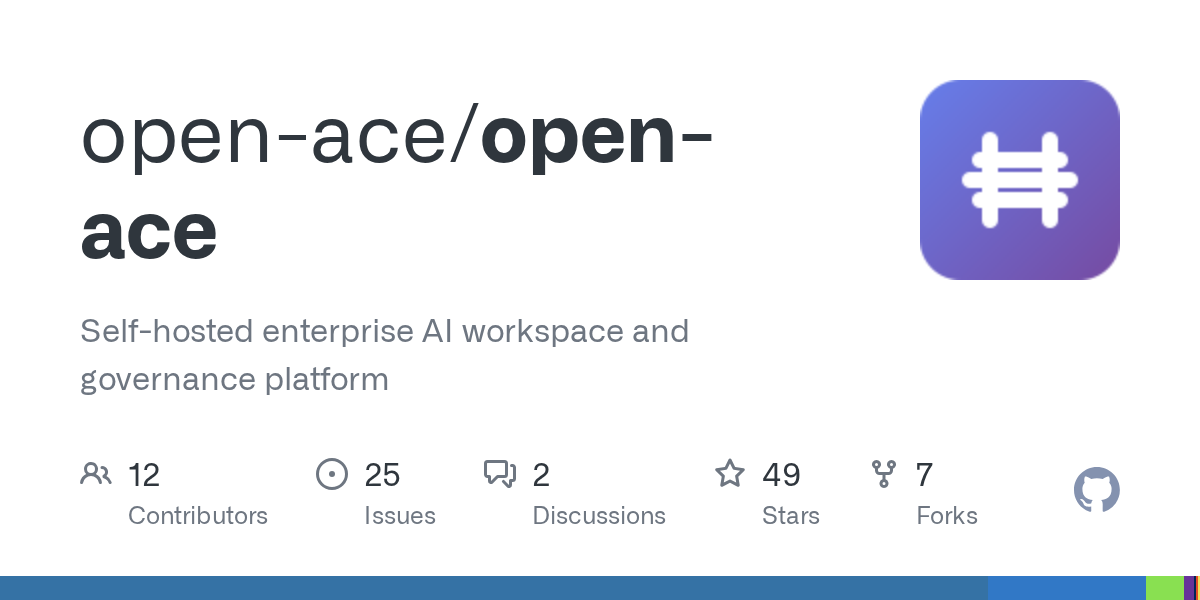
Open ACE: Self-Hosted AI Coding Agent Workspace and Governance Platform
Open ACE is an open-source, self-hosted platform designed for managing AI coding agents within enterprise environments. It provides a unified workspace for various AI tools, enabling remote execution and robust governance features for API keys, costs, and compliance. This platform is ideal for organizations integrating AI coding agents into their development workflows, especially those requiring private deployment and centralized control.
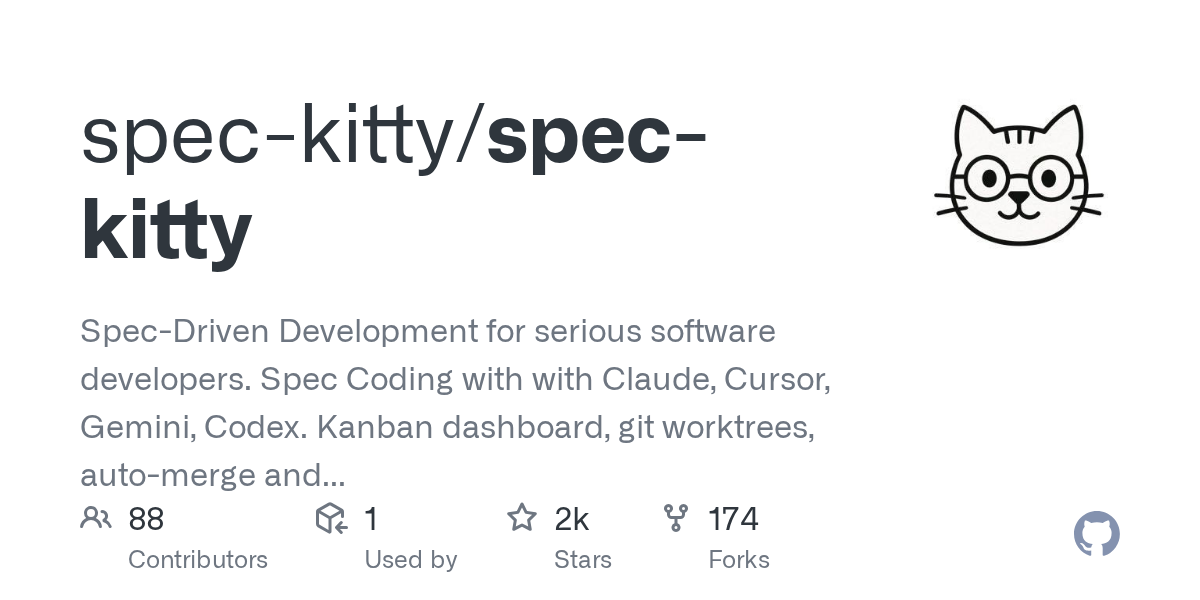
Spec Kitty: Spec-Driven Development for AI Coding Agents and Software Factories
Spec Kitty is an open-source CLI that enables spec-driven development for AI coding agents and multi-agent workflows. It transforms product intent into a structured, repo-native AI coding workflow, providing isolated git worktrees and a clear lifecycle for development tasks. This tool helps teams build governed software factories, ensuring visibility and traceability in AI-assisted software development.