ECC vs context-engineering-kit
Coding-agent workflow toolkits compared
ECC and context-engineering-kit provide reusable workflows and guidance for coding agents, with Claude Code as a key target for both. ECC is a broader agent-harness toolkit with hooks, memory, and configuration scanning, while context-engineering-kit focuses on selectable skills and structured development workflows.
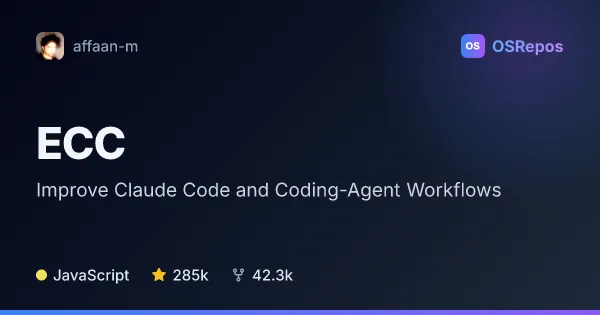
ECC: Improve Claude Code and Coding-Agent Workflows
ECC is an agent-harness toolkit built around Claude Code, with native plugin paths for Codex and Qoder and adapters for other coding agents. It adds reusable skills, specialized agents, hooks, memory, and security scanning to help teams plan, test, review, and improve code systematically.
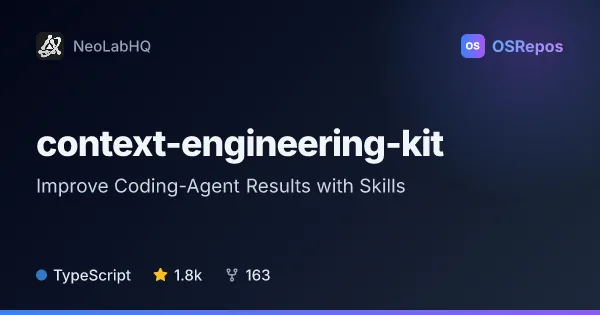
context-engineering-kit: Improve Coding-Agent Results with Skills
A token-conscious collection of Claude Code Skills for improving coding-agent result quality and predictability. It also supports OpenCode, Cursor, Antigravity, Gemini CLI and other agent clients, with workflows for development, review and reflection.
| ECC | context-engineering-kit | |
|---|---|---|
| Language | JavaScript | TypeScript |
| License | MIT | GPL-3.0 |
| Stars | 285k | 1.8k |
| Forks | 42.3k | 163 |
| Last analyzed | Oct 21, 2026 | Oct 25, 2026 |
Key differences
- ECC provides skills, specialized agents, hooks, memory, rules, and AgentShield configuration scanning; context-engineering-kit centers on skills and plugins for specification-driven development, delegation, and reflection.
- ECC is written in JavaScript and is licensed under MIT; context-engineering-kit is written in TypeScript and is licensed under GPL-3.0.
- ECC offers native plugin paths for Codex and Qoder and adapters for other agents; context-engineering-kit supports clients including OpenCode, Cursor, Antigravity, and Gemini CLI, with some client-specific limits on plugin selection and subagents.
- ECC includes install, update, repair, and uninstall tools; context-engineering-kit lets users install individual plugins in some clients, while other installation paths offer reduced capabilities.
- ECC reports 285k stars and 42.3k forks; context-engineering-kit reports 1.8k stars and 163 forks.
- Both projects are active, but context-engineering-kit notes contributor concentration and no issues closed in the measured period; ECC advises checking requirements and varying harness support before adoption.
Choose ECC if you…
- need a broad agent harness with reusable skills, agents, hooks, memory, and security scanning.
- want shared engineering rules or to inspect agent configurations for risky settings and secrets.
- use Claude Code, Codex, or Qoder and want documented options for other harnesses, while accounting for uneven support.
Choose context-engineering-kit if you…
- want specification-driven development, subagent workflows, and review gates organized as skills and plugins.
- prefer installing selected plugins in supported clients to keep unrelated skills and agents out of context.
- want reflection loops that preserve recurring lessons, or specialized reviews of local changes and pull requests.
Compare the numbers side by side, or add more projects
This comparison is generated with AI from the OSRepos analyses of both projects. Always check each project's repository and documentation before choosing.