ECC vs cc-polymath
Coding-agent workflows and Claude Code skills compared
ECC equips coding agents with reusable workflows for planning, implementation, testing, review, and security. cc-polymath is a Claude Code catalog of focused technical skills; ECC emphasizes agent processes and tooling, while cc-polymath emphasizes on-demand reference guidance.
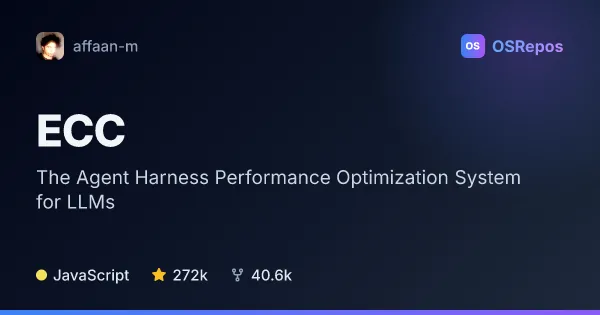
ECC: Equip Coding Agents with Reusable Engineering Workflows
ECC is a toolkit for adding structured engineering workflows to AI coding agents. It combines reusable skills, specialized agents, hooks, memory, and security scanning, with support across Claude Code and several other harnesses.
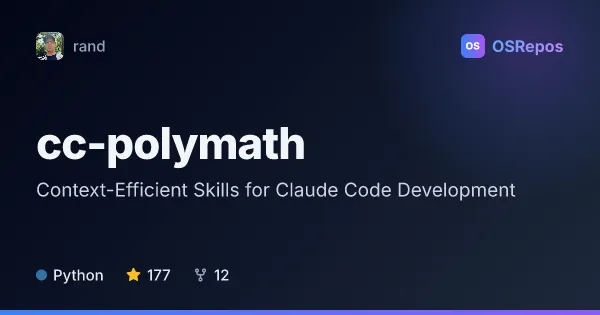
cc-polymath: Discover Context-Efficient Claude Code Skills
cc-polymath is a large catalog of focused development skills for Claude Code, organized for progressive discovery. It helps developers load relevant guidance on demand instead of filling the context window with a monolithic reference.
| ECC | cc-polymath | |
|---|---|---|
| Language | JavaScript | Python |
| License | MIT | MIT |
| Stars | 272k | 177 |
| Forks | 40.6k | 12 |
| Last analyzed | Oct 3, 2026 | Oct 3, 2026 |
Key differences
- ECC combines reusable skills with specialized agents, optional hooks, memory, and security scanning; cc-polymath centers on focused skills and progressive discovery.
- ECC supports Claude Code and several other coding-agent harnesses, with varying coverage; cc-polymath is intended for Claude Code.
- ECC is written in JavaScript, while cc-polymath is written in Python.
- ECC describes workflows for recurring development tasks such as build repair and code review; cc-polymath spans technical domains including infrastructure, AI, mathematics, and formal methods.
- ECC has 272k stars and 40.6k forks; cc-polymath has 177 stars and 12 forks.
- Both projects use the MIT license and are not archived.
Choose ECC if you…
- need reusable planning, testing, review, and security workflows for coding agents.
- want specialized agents, optional session automation, or memory features.
- use multiple coding-agent harnesses and can account for differences in support.
Choose cc-polymath if you…
- want to discover and load focused Claude Code guidance on demand.
- work across technical domains and want to combine individual reference skills.
- maintain a Claude Code skill collection and want examples of progressive discovery and validation practices.
Compare the numbers side by side, or add more projects
This comparison is generated with AI from the OSRepos analyses of both projects. Always check each project's repository and documentation before choosing.