ai-memory vs open-timeline-engine
Persistent memory for coding agents compared
ai-memory and open-timeline-engine both capture work over time so AI agents can reuse project context across sessions. ai-memory centers on a git-backed Markdown wiki and handoffs, while open-timeline-engine focuses on cited context, patterns, and policy controls for MCP-compatible agents.
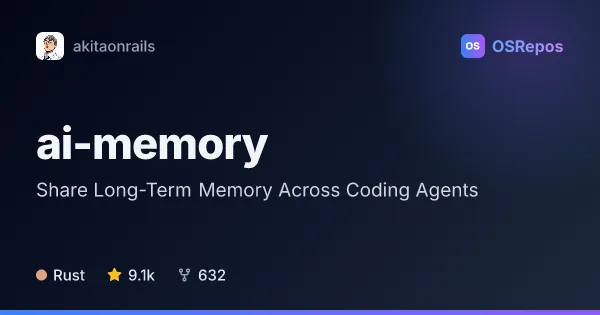
ai-memory: Share Long-Term Memory Across Coding Agents
A self-hosted Rust service that captures coding-agent activity into a searchable, git-backed Markdown wiki and hands work between agents. It suits developers and teams who want portable project memory without requiring LLM calls.
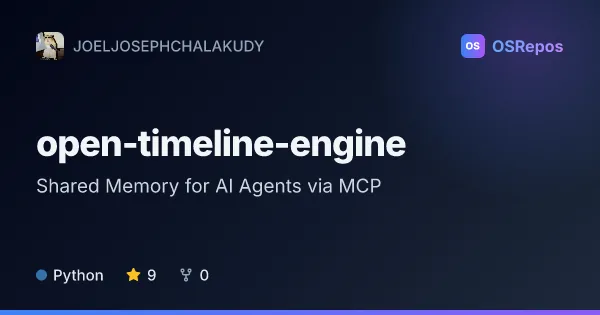
open-timeline-engine: Shared Memory for AI Agents via MCP
Open Timeline Engine is a local-first Python context engine for MCP-compatible agents such as Claude, Codex, and Cursor. It captures work over time, finds recurring patterns, and returns past decisions with citations and safety gates.
| ai-memory | open-timeline-engine | |
|---|---|---|
| Language | Rust | Python |
| License | MIT | Apache-2.0 |
| Stars | 9.1k | 9 |
| Forks | 632 | 0 |
| Last analyzed | Oct 10, 2026 | Oct 15, 2026 |
Key differences
- ai-memory is written in Rust and stores its source of truth as git-backed Markdown; open-timeline-engine is written in Python and organizes captured activity as timeline events, patterns, and graph data.
- ai-memory supports agent integrations through MCP registration, hooks, or both; open-timeline-engine connects MCP-compatible clients and also captures activity from sources such as Git, VSCode, and browser plugins.
- ai-memory provides typed, claim-once handoffs and optional LLM features; open-timeline-engine offers advisor mode, citations, and layered policy and execution controls.
- ai-memory can run locally or as a shared server for multiple machines and teammates; open-timeline-engine is designed for local operation with shared or per-executor workspaces.
- ai-memory is licensed under MIT and has 9.1k stars; open-timeline-engine is licensed under Apache-2.0 and has 9 stars.
- ai-memory is new and changing quickly; open-timeline-engine explicitly labels itself experimental and not production-ready.
Choose ai-memory if you…
- want project memory stored in inspectable, version-controllable Markdown.
- need typed handoffs between supported coding agents, with a default path that does not require LLM API calls.
- plan to share project knowledge across machines or teammates while keeping personal handoffs separate.
Choose open-timeline-engine if you…
- want cited context drawn from agent sessions and sources such as Git, VSCode, or browser plugins.
- need to explore advisor mode and layered policy controls for agent actions.
- are prepared to evaluate an experimental system that recommends the full Docker Compose runtime for reliable behavior.
Compare the numbers side by side, or add more projects
This comparison is generated with AI from the OSRepos analyses of both projects. Always check each project's repository and documentation before choosing.