ice vs dioxus
React web framework and Rust cross-platform UI framework compared
ice is a TypeScript-based framework for building React applications, while dioxus is a Rust UI framework for web, desktop, and mobile apps. Their main difference is language and scope: ice focuses on React applications and multi-end support, while dioxus targets cross-platform apps from a shared Rust codebase.
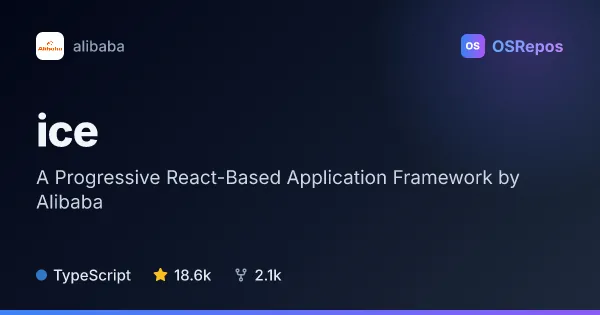
ice: Build React Applications with a Progressive Framework
ice.js is a TypeScript-based framework for building React applications, with support for routing, plugins, and rendering pages at build time or request time. It suits teams that want a configurable foundation for web apps and multi-end projects.
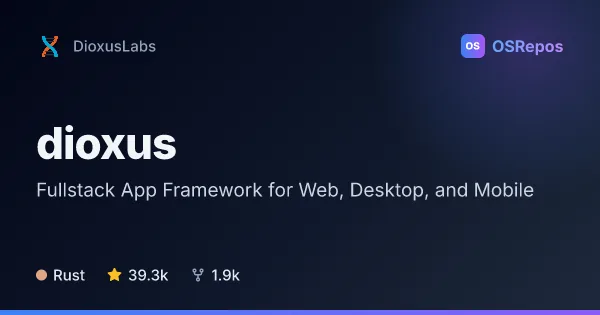
dioxus: Build Cross-Platform Apps with Rust
Dioxus is a Rust UI framework for building web, desktop, and mobile apps from a shared codebase. It combines reactive UI, development tooling, and optional fullstack features for teams that want Rust across client and server.
| ice | dioxus | |
|---|---|---|
| Language | TypeScript | Rust |
| License | MIT | Apache-2.0 |
| Stars | 18.6k | 39.3k |
| Forks | 2.1k | 1.9k |
| Last analyzed | Oct 3, 2026 | Oct 3, 2026 |
Key differences
- ice is built around React and TypeScript; dioxus builds interfaces in Rust with components, RSX markup, and signals-based state.
- ice targets web, miniapp, and Weex applications; dioxus targets web, desktop, and mobile.
- ice supports static generation and server-side rendering; dioxus offers web rendering, webviews, server-side rendering, and experimental WGPU rendering.
- ice uses a plugin system and supports file-system routing; dioxus provides a `dx` CLI, development server, and asset hot-reloading.
- ice is licensed under MIT; dioxus is licensed under Apache-2.0.
- The projects report 18.6k stars and 395 open issues for ice, compared with 39.3k stars and 813 open issues for dioxus. Both are unarchived.
Choose ice if you…
- need a React and TypeScript foundation with routing and plugin support.
- want static generation or request-time server rendering for a web application.
- need a framework that also targets miniapp or Weex.
Choose dioxus if you…
- want to build interfaces in Rust across web, desktop, and mobile.
- need to share UI and application logic across platforms while retaining platform-specific native access.
- want a Rust fullstack path with server functions and server-side rendering.
Compare the numbers side by side, or add more projects
This comparison is generated with AI from the OSRepos analyses of both projects. Always check each project's repository and documentation before choosing.