axolotl vs LlamaFactory
LLM fine-tuning frameworks compared
axolotl and LlamaFactory are Python frameworks for fine-tuning language models, with support for parameter-efficient methods and multimodal workflows. axolotl emphasizes YAML-configured training and distributed options, while LlamaFactory offers both a CLI and a Gradio web interface, plus inference and model export workflows.
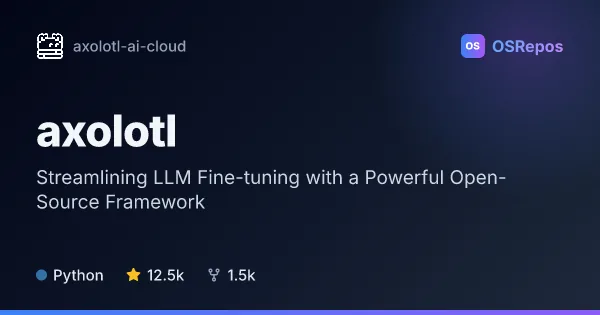
axolotl: Fine-Tune Large Language Models
Axolotl is a Python framework for fine-tuning and post-training language models through configurable workflows. It supports methods from LoRA and QLoRA to preference tuning and reinforcement learning, with options for multimodal and distributed training.
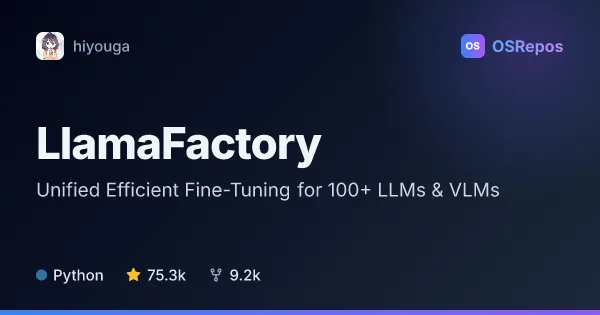
LlamaFactory: Fine-Tune Large Language and Vision Models
LlamaFactory provides CLI and web interfaces for fine-tuning a broad range of language and vision models. It supports parameter-efficient methods and preference training, with workflows for training, inference, and model export.
| axolotl | LlamaFactory | |
|---|---|---|
| Language | Python | Python |
| License | Apache-2.0 | Apache-2.0 |
| Stars | 12.5k | 75.3k |
| Forks | 1.5k | 9.2k |
| Last analyzed | Oct 3, 2026 | Oct 3, 2026 |
Key differences
- axolotl uses YAML configuration across preprocessing, training, evaluation, quantization, and inference; LlamaFactory provides CLI commands and a Gradio-based web interface.
- axolotl lists DPO, IPO, KTO, ORPO, GRPO, and reward-model training; LlamaFactory lists preference and reinforcement-learning methods including DPO and PPO.
- axolotl names FSDP2, DeepSpeed, and multi-node workflows for distributed training; LlamaFactory highlights integrations such as vLLM, SGLang, experiment tracking, and selected acceleration tools.
- axolotl describes workflows for supported vision, audio, and video models; LlamaFactory also covers text, image, video, and audio-related tasks, depending on the model and workflow.
- LlamaFactory includes workflows for inference and exporting merged checkpoints; axolotl describes inference as part of its consistent workflow.
- Both projects use Python and have an Apache-2.0 license; the supplied figures list 12.5k stars and 1.5k forks for axolotl, and 75.3k stars and 9.2k forks for LlamaFactory.
Choose axolotl if you…
- need YAML configuration spanning dataset preparation, training, evaluation, quantization, and inference.
- want named distributed-training options such as FSDP2, DeepSpeed, or multi-node workflows.
- plan to explore preference-tuning methods including IPO, KTO, ORPO, or GRPO.
Choose LlamaFactory if you…
- want both a CLI and a Gradio web interface for common tasks.
- need workflows that include inference and exporting merged model checkpoints.
- want to work with a broad selection of language and vision models, including families such as Llama, Qwen, Gemma, and DeepSeek.
Compare the numbers side by side, or add more projects
This comparison is generated with AI from the OSRepos analyses of both projects. Always check each project's repository and documentation before choosing.