deer-flow vs Memoh
AI agent runtimes and persistent workspaces compared
deer-flow and Memoh both support multi-agent AI workflows, but emphasize different needs. deer-flow coordinates delegated, long-running tasks with an extensible runtime, while Memoh gives agents persistent, isolated workspaces with desktop and browser access.
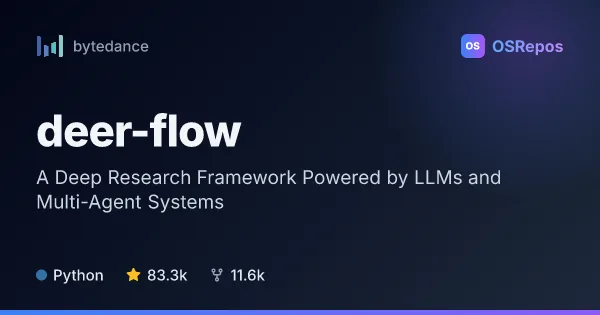
deer-flow: Orchestrate Long-Running AI Agent Tasks
DeerFlow is a self-hosted harness for AI agents that coordinate subagents, memory, tools, and sandboxes on tasks that can run from minutes to hours. It suits teams building research, coding, and content workflows that need an extensible agent runtime.
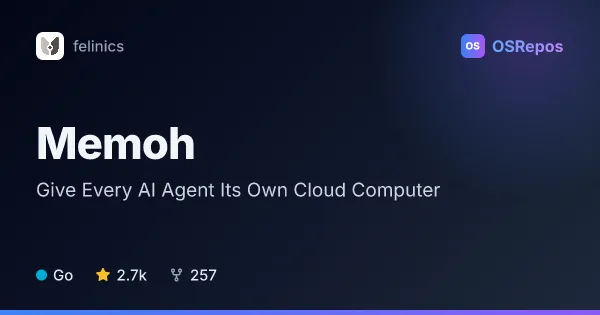
Memoh: Give Every AI Agent Its Own Cloud Computer
Memoh is a Go-based, open-source multi-agent platform that gives each agent an always-on cloud computer with a desktop, browser, network, and long-term memory. Use its built-in agent with your own API keys or host Claude Code and Codex, and connect through chat platforms or the web UI.
| deer-flow | Memoh | |
|---|---|---|
| Language | Python | Go |
| License | MIT | AGPL-3.0 |
| Stars | 83.4k | 2.7k |
| Forks | 11.6k | 257 |
| Last analyzed | Oct 3, 2026 | Oct 20, 2026 |
Key differences
- deer-flow focuses on a lead agent delegating research, coding, and content work to subagents; Memoh focuses on keeping agents in dedicated workspaces across sessions.
- deer-flow offers local, Docker, and Kubernetes-backed sandbox modes; Memoh offers cloud access or self-hosting, with Docker Compose documented for full-stack deployment.
- deer-flow is written in Python and licensed under MIT; Memoh is written in Go and licensed under AGPL-3.0.
- deer-flow lists 83.4k stars and 895 open issues; Memoh lists 2.6k stars and 82 open issues.
- deer-flow supports skills, configurable MCP servers, memory, and web search integrations; Memoh supports its built-in agent, hosted Claude Code and Codex, messaging platforms, and scheduled tasks.
Choose deer-flow if you…
- need an extensible runtime for delegated, long-running research or coding tasks.
- want sandbox options including local, Docker, or Kubernetes-backed execution.
- prefer an MIT-licensed project written in Python.
Choose Memoh if you…
- want persistent, isolated agent workspaces with a desktop, browser, and network access.
- want to host Claude Code or Codex, or use Memoh's built-in agent with your API keys.
- need agents accessible through messaging platforms or kept running while your computer is off.
Compare the numbers side by side, or add more projects
This comparison is generated with AI from the OSRepos analyses of both projects. Always check each project's repository and documentation before choosing.