deer-flow vs deepagents
AI agent harnesses for long-running work compared
deer-flow and deepagents are Python harnesses for building agents that plan, delegate work, and use tools over multi-step tasks. deer-flow focuses on a self-hosted runtime with deployment and workspace options, while deepagents bundles planning, file operations, and context management into an opinionated agent structure.
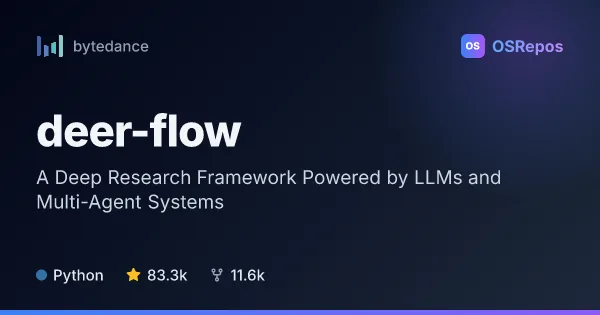
deer-flow: Orchestrate Long-Running AI Agent Tasks
DeerFlow is a self-hosted harness for AI agents that coordinate subagents, memory, tools, and sandboxes on tasks that can run from minutes to hours. It suits teams building research, coding, and content workflows that need an extensible agent runtime.
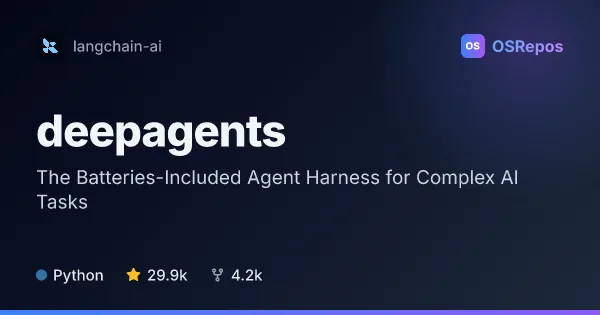
deepagents: Build Agents with Planning and Tooling Built In
Deep Agents is a Python agent harness for building LLM agents with planning, delegation, file access, and context management built in. It suits developers who need a more capable starting point than a minimal agent loop, while retaining control over models and tools.
| deer-flow | deepagents | |
|---|---|---|
| Language | Python | Python |
| License | MIT | MIT |
| Stars | 83.4k | 29.9k |
| Forks | 11.6k | 4.2k |
| Last analyzed | Oct 3, 2026 | Oct 3, 2026 |
Key differences
- deer-flow describes a lead agent coordinating subagents across tasks that may run for minutes to hours; deepagents emphasizes built-in planning and delegation for multi-step work.
- deer-flow offers local, Docker, and Kubernetes-backed sandbox modes; deepagents runs shell commands through a chosen sandbox and provides pluggable file backends.
- deer-flow includes a web interface, messaging channels, and a terminal workbench; deepagents focuses on an agent harness that developers can customize or use with LangChain and LangGraph.
- deer-flow lists SQLite or PostgreSQL for persistent deployments and Docker or local startup paths; deepagents supports configurable state and store backends for memory across sessions.
- Both projects use Python and have an MIT license. deer-flow lists 83.4k stars and 11.6k forks, while deepagents lists 29.9k stars and 4.2k forks.
Choose deer-flow if you…
- need a self-hosted agent runtime with web, messaging, or terminal interfaces.
- want local, Docker, or Kubernetes-backed sandbox options for delegated agent work.
- need configurable skills, MCP servers, and memory for longer research, coding, or content workflows.
Choose deepagents if you…
- want planning, file operations, delegation, and context management bundled into an agent harness.
- need sub-agents with isolated context windows and file tools with pluggable backends.
- prefer an agent structure built on LangGraph that you can customize, with configurable memory and human approval steps.
Compare the numbers side by side, or add more projects
This comparison is generated with AI from the OSRepos analyses of both projects. Always check each project's repository and documentation before choosing.