oh-my-pi vs zero
Terminal coding agents compared
oh-my-pi and zero are open source terminal coding agents that inspect and edit repositories, and both support multiple model providers. oh-my-pi focuses on IDE-aware tools and integration options, while zero emphasizes configurable permissions, local sessions, and scriptable use.
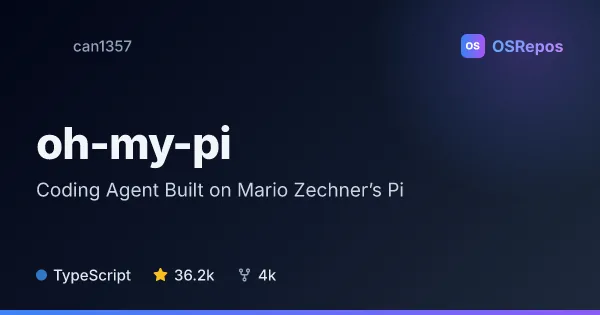
oh-my-pi: Coding Agent Built on Mario Zechner’s Pi
oh-my-pi is a terminal-first coding agent and IDE-aware fork of Mario Zechner’s Pi, with built-in code tools, subagents, and editor integration. It runs on macOS, Linux, and Windows, and can also be embedded as a TypeScript SDK.
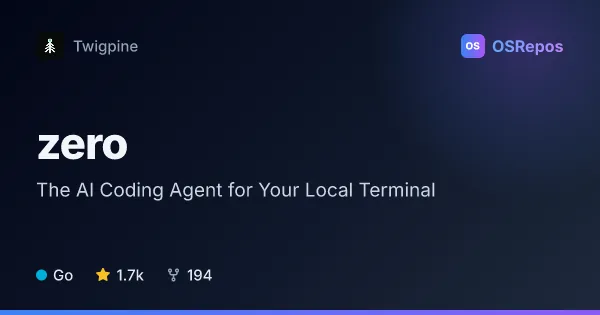
zero: Run a Local Terminal Coding Agent
Zero is a Go-based terminal coding agent that can inspect and edit repositories, run commands, and work with many hosted or local models. It suits developers who want scriptable coding assistance with local sessions and explicit controls over side effects.
| oh-my-pi | zero | |
|---|---|---|
| Language | TypeScript | Go |
| License | MIT | MIT |
| Stars | 36.2k | 1.7k |
| Forks | 4k | 194 |
| Last analyzed | Oct 21, 2026 | Oct 3, 2026 |
Key differences
- oh-my-pi is written in TypeScript with a substantial Rust native core; zero is written in Go.
- oh-my-pi offers language-server operations, debugging through DAP, and persistent Python and JavaScript execution; zero lists repository utilities, sandbox policies, and session controls.
- oh-my-pi provides terminal, SDK, RPC, and editor-facing ACP entry points; zero provides an interactive TUI and a headless command with structured I/O options.
- oh-my-pi supports macOS, Linux, and Windows; zero's npm package uses optional platform packages for its binaries.
- Both use the MIT license, while the supplied project data lists 36.2k stars and 4k forks for oh-my-pi, and 1.7k stars and 194 forks for zero.
Choose oh-my-pi if you…
- need IDE-aware coding tools such as language-server operations or debugging.
- want to embed an agent through a TypeScript SDK or connect through RPC or editor-facing ACP.
- work across macOS, Linux, and Windows with configurable model providers.
Choose zero if you…
- want permissions and sandbox policies for file writes, shell commands, network access, or extra directories.
- need a headless coding-agent command for scripts or CI with structured I/O.
- want local sessions that can be searched, resumed, forked, or rewound.
Compare the numbers side by side, or add more projects
This comparison is generated with AI from the OSRepos analyses of both projects. Always check each project's repository and documentation before choosing.