codegraph vs repomix
Codegraph and repomix for AI-assisted code exploration
codegraph builds a local, queryable graph of code structure for agents to retrieve symbols, call paths, and potential change impact. repomix packages repository files into a structured output for AI review and analysis, with controls for file selection and token usage.
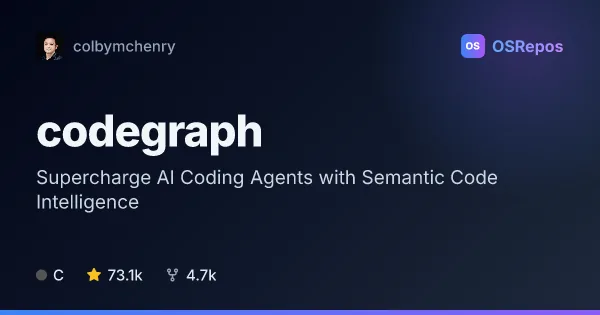
codegraph: Give Coding Agents a Local Code Knowledge Graph
CodeGraph builds and maintains a local graph of code structure so AI coding agents can retrieve relevant source, call paths, and change impact without exploring files one by one. It connects to multiple agents through MCP and supports many languages.
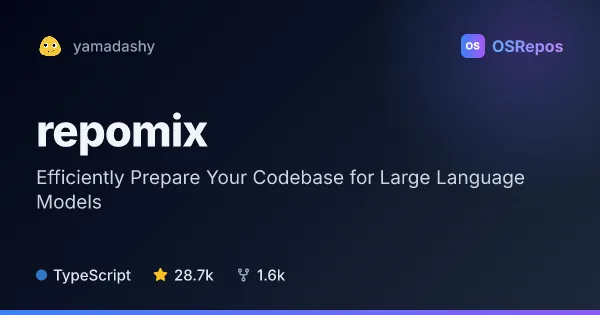
repomix: Pack Codebases for AI Analysis
Repomix combines repository files into a structured, AI-friendly output for code review, exploration, and other LLM workflows. Use it from the CLI, website, or as an MCP server, with controls for file selection and token usage.
| codegraph | repomix | |
|---|---|---|
| Language | C | TypeScript |
| License | MIT | MIT |
| Stars | 73.1k | 28.7k |
| Forks | 4.7k | 1.6k |
| Last analyzed | Oct 3, 2026 | Oct 3, 2026 |
Key differences
- codegraph indexes symbols and relationships in a local SQLite graph; repomix combines selected repository files into a single output.
- codegraph is designed for ongoing code exploration, including tracing callers and assessing impact; repomix focuses on preparing codebase context for review, explanation, or other LLM workflows.
- codegraph supports a CLI and MCP server and incrementally syncs file changes; repomix offers a CLI, website, and MCP server, and can work with local or remote repositories.
- codegraph is written in C, while repomix is written in TypeScript. Both use the MIT license.
- codegraph lists 73.1k stars and 4.7k forks; repomix lists 28.7k stars and 1.6k forks.
Choose codegraph if you…
- need agents to query code symbols, relationships, call paths, or potential change impact.
- want a local index that can stay current as project files change.
- use an MCP-connected coding agent or CLI to explore an initialized project.
Choose repomix if you…
- want to package local or remote repository files for AI review or analysis.
- need to select and exclude files, choose an output format, or manage token budgets.
- want a website option or an MCP server for packaging codebase context.
Compare the numbers side by side, or add more projects
This comparison is generated with AI from the OSRepos analyses of both projects. Always check each project's repository and documentation before choosing.