word-atlas vs read-frog
IELTS vocabulary study compared with web-based language learning
word-atlas is a browser-based IELTS vocabulary app with illustrated cards, exercises, and FSRS review. read-frog is a browser extension for studying languages while reading web pages and YouTube subtitles, with translation and AI-assisted tools.
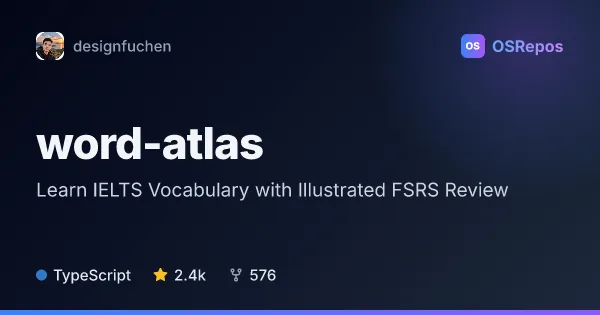
word-atlas: Learn IELTS Vocabulary with Illustrated FSRS Review
Word Atlas is a browser-based IELTS vocabulary app built with React and TypeScript, using FSRS for spaced review. It pairs illustrated word cards, UK and US audio, and practice exercises with a downloadable vocabulary dataset; learning progress stays on the user’s device.
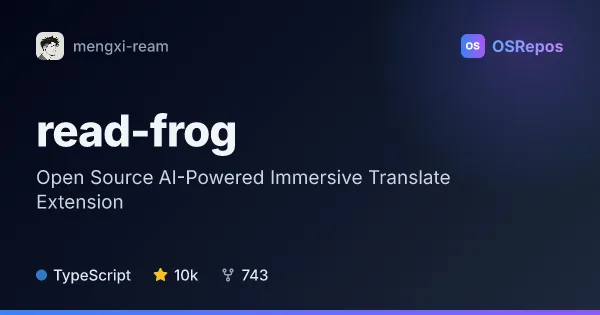
read-frog: Learn Languages While Reading the Web
Read Frog is a browser extension for language learners who want translation and AI-assisted study tools alongside everyday web reading. It supports multiple AI providers, selection and subtitle translation, text-to-speech, and flashcards.
| word-atlas | read-frog | |
|---|---|---|
| Language | TypeScript | TypeScript |
| License | — | GPL-3.0 |
| Stars | 2.4k | 10k |
| Forks | 576 | 744 |
| Last analyzed | Oct 27, 2026 | Oct 3, 2026 |
Key differences
- word-atlas focuses on IELTS vocabulary and includes a reusable dataset; read-frog supports language learning through everyday web content and video subtitles.
- word-atlas pairs vocabulary with illustrations, bilingual definitions, and UK and US audio; read-frog offers contextual translation, explanations, and text-to-speech.
- word-atlas stores learning progress on the user’s device and works without an account; read-frog can connect to configured AI providers or use listed free translation options.
- word-atlas is MIT-licensed application code, with vocabulary content and media under CC BY 4.0; read-frog describes dual licensing under GPLv3 and a commercial license.
- word-atlas reports 2.4k stars and 576 forks, with development concentrated in one contributor; read-frog reports 10k stars and 744 forks and describes itself as under active development.
- word-atlas provides vocabulary data in JSON and CSV for reuse; read-frog saves vocabulary and reading notes to Notebase for flashcard review.
Choose word-atlas if you…
- study IELTS vocabulary with illustrated cards and scheduled review.
- practice spelling and listening with UK or US pronunciations.
- reuse structured vocabulary data and media in learning tools or research.
Choose read-frog if you…
- read web pages with translations and explanations alongside the original text.
- study language through translated YouTube subtitles and text-to-speech.
- save vocabulary and reading notes, then review them as flashcards.
Compare the numbers side by side, or add more projects
This comparison is generated with AI from the OSRepos analyses of both projects. Always check each project's repository and documentation before choosing.