word-atlas vs qwerty-learner
Vocabulary learning tools compared
word-atlas and qwerty-learner are browser-based tools for studying English vocabulary. word-atlas uses illustrated cards and spaced review, while qwerty-learner makes typing words the core of practice.
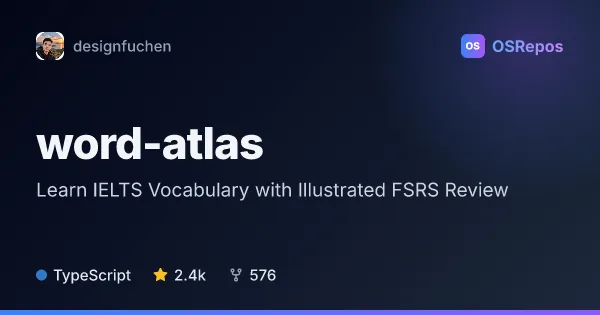
word-atlas: Learn IELTS Vocabulary with Illustrated FSRS Review
Word Atlas is a browser-based IELTS vocabulary app built with React and TypeScript, using FSRS for spaced review. It pairs illustrated word cards, UK and US audio, and practice exercises with a downloadable vocabulary dataset; learning progress stays on the user’s device.
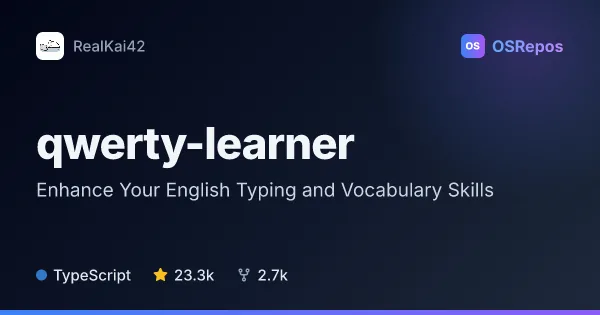
qwerty-learner: Learn Vocabulary Through Typing Practice
Qwerty Learner combines vocabulary study with English typing drills, helping keyboard users build word recall and accurate typing muscle memory. It includes study lists for exams, general English, and programming-related terms and APIs.
| word-atlas | qwerty-learner | |
|---|---|---|
| Language | TypeScript | TypeScript |
| License | — | GPL-3.0 |
| Stars | 2.4k | 23.3k |
| Forks | 576 | 2.7k |
| Last analyzed | Oct 27, 2026 | Oct 3, 2026 |
Key differences
- word-atlas pairs vocabulary with illustrations, bilingual definitions, examples, and usage notes; qwerty-learner centers practice on typing words and retrying incorrect entries.
- word-atlas uses FSRS to schedule reviews and offers several practice modes; qwerty-learner tracks typing speed and accuracy and includes chapter dictation.
- word-atlas provides a reusable vocabulary dataset in JSON and CSV, with media; qwerty-learner offers exam, general English, programming, and API vocabulary lists.
- word-atlas stores progress on the user’s device and supports offline use; qwerty-learner is available in a browser and also has a separate VS Code extension.
- word-atlas is MIT-licensed for its application code, with vocabulary content and media under CC BY 4.0; qwerty-learner is GPL-3.0 licensed.
- word-atlas has 2.4k stars and 576 forks, while qwerty-learner has 23.3k stars and 2.7k forks.
Choose word-atlas if you…
- want illustrated vocabulary cards with bilingual definitions and example sentences.
- need spaced review, listening and spelling exercises, or offline access to progress.
- plan to reuse a structured vocabulary dataset and associated media.
Choose qwerty-learner if you…
- want to combine vocabulary recall with accurate English typing practice.
- need exam, programming, or API vocabulary lists and chapter dictation.
- want typing speed and accuracy tracked during vocabulary practice.
Compare the numbers side by side, or add more projects
This comparison is generated with AI from the OSRepos analyses of both projects. Always check each project's repository and documentation before choosing.