EasyTier vs tailscale
Private device networks compared
EasyTier and tailscale connect devices across networks in private virtual networks. EasyTier describes a decentralized mesh with NAT traversal and optional relay nodes, while tailscale provides a WireGuard-based network that connects to its hosted service.
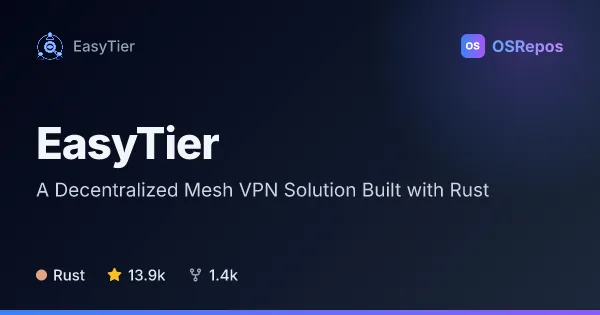
EasyTier: Build Decentralized Mesh VPNs
EasyTier connects devices across networks through a decentralized virtual private network, with NAT traversal and optional relay nodes. It suits people who need private connectivity between remote devices or subnets without relying on a centralized VPN service.
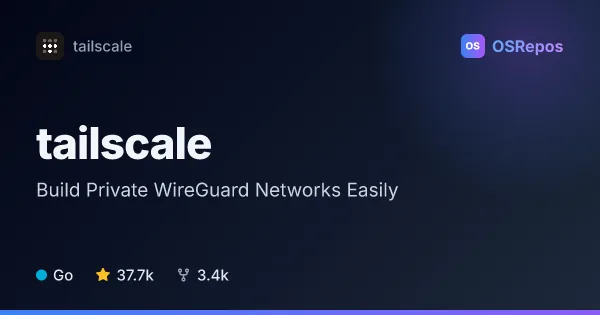
tailscale: Build Private WireGuard Networks Easily
Tailscale makes private WireGuard networks easier to use, with a daemon and CLI for Linux, Windows, and macOS, plus varying support for FreeBSD and OpenBSD. This Go project also supplies code used by its iOS and Android apps.
| EasyTier | tailscale | |
|---|---|---|
| Language | Rust | Go |
| License | LGPL-3.0 | BSD-3-Clause |
| Stars | 13.9k | 37.7k |
| Forks | 1.4k | 3.4k |
| Last analyzed | Oct 3, 2026 | Oct 18, 2026 |
Key differences
- EasyTier is written in Rust; tailscale is written in Go.
- EasyTier is licensed under LGPL-3.0, while tailscale is licensed under BSD-3-Clause.
- EasyTier supports AES-GCM or WireGuard encryption and lists multiple transport options; tailscale is based on WireGuard.
- EasyTier offers decentralized node connections with relay fallback; tailscale connects to Tailscale’s hosted service.
- EasyTier includes CLI and web management, plus desktop and mobile support; tailscale’s repository includes a daemon and CLI, with some client interfaces and packages maintained elsewhere.
- The supplied project data lists 13.9k stars for EasyTier and 37.1k for tailscale.
Choose EasyTier if you…
- need a decentralized mesh VPN with NAT traversal and relay fallback.
- want subnet proxying, automatic route selection, or multiple transport options.
- prefer Rust software with CLI and web management options.
Choose tailscale if you…
- want a WireGuard-based private network connected to Tailscale’s hosted service.
- need authentication features such as two-factor authentication and a daemon with CLI.
- prefer Go software with distribution packages for a range of platforms.
Compare the numbers side by side, or add more projects
This comparison is generated with AI from the OSRepos analyses of both projects. Always check each project's repository and documentation before choosing.