compound-engineering-plugin vs agent-feed
AI coding workflows compared
compound-engineering-plugin provides reusable skills that guide AI agents through planning, coding, review, and learning. agent-feed installs a repository-owned workflow with shared instructions, checks, and gates; it focuses on consistent, verifiable practices across tools.
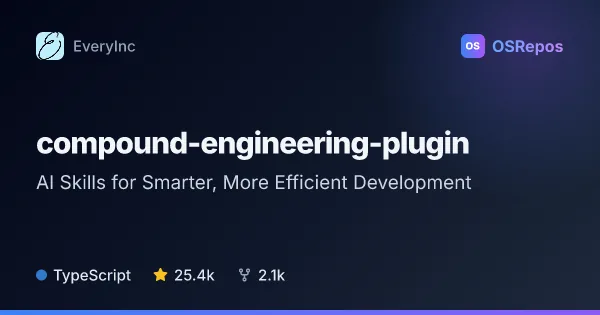
compound-engineering-plugin: Guide AI Agents Through Engineering Work
Compound Engineering provides reusable skills for AI coding agents, guiding work from brainstorming and planning through implementation, review, and captured learnings. It supports multiple agent hosts, including Claude Code, Cursor, and Codex.
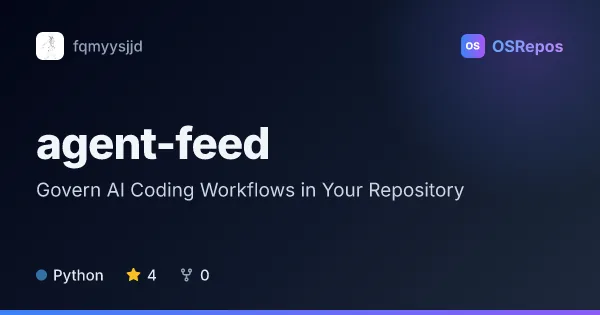
agent-feed: Govern AI Coding Workflows in Your Repository
Agent Feed installs a repository-owned workflow for AI coding tools, with shared instructions, task and review gates, checks, and tool adapters. It suits teams that want consistent, verifiable AI-assisted changes across Codex, Claude Code, and Cursor.
| compound-engineering-plugin | agent-feed | |
|---|---|---|
| Language | TypeScript | Python |
| License | MIT | MIT |
| Stars | 25.4k | 4 |
| Forks | 2.1k | 0 |
| Last analyzed | Oct 3, 2026 | Oct 12, 2026 |
Key differences
- compound-engineering-plugin offers agent skills for the engineering process, while agent-feed is a Python CLI that installs and validates workflow assets in a repository.
- compound-engineering-plugin emphasizes brainstorming, planning, implementation, review, and recording lessons; agent-feed emphasizes task boundaries, decision checkpoints, verification gates, and session handoff.
- compound-engineering-plugin is written in TypeScript, while agent-feed is written in Python and requires Python 3.11 or newer.
- Both support Claude Code, Cursor, and Codex, but agent-feed uses thin adapters around a shared repository protocol.
- compound-engineering-plugin has 25.4k stars and 2.1k forks; agent-feed has 4 stars and no forks, with contribution activity concentrated in one contributor.
- Both use the MIT license. compound-engineering-plugin describes an opinionated agent workflow, while agent-feed is intended to complement rather than replace coding agents or project test infrastructure.
Choose compound-engineering-plugin if you…
- want reusable agent skills for brainstorming, planning, implementation, review, and debugging.
- need to capture engineering lessons so future agent-assisted tasks can reuse them.
- prefer an opinionated workflow that can include autonomous execution and supports multiple agent hosts.
Choose agent-feed if you…
- want repository-owned instructions and workflow rules shared across Codex, Claude Code, and Cursor.
- need task scope, human decision checkpoints, verification, review, or session handoff built into team practices.
- want a CLI to manage workflow assets, adapters, and project-specific constraints.
Compare the numbers side by side, or add more projects
This comparison is generated with AI from the OSRepos analyses of both projects. Always check each project's repository and documentation before choosing.