pelican vs Hugo
Python and Go static site generators compared
pelican and hugo both turn files, templates, and configuration into static websites that can be hosted without a dynamic application server. pelican centers on Python publishing from Markdown, reStructuredText, or HTML, while hugo uses Go and includes a development server and asset-processing workflows.
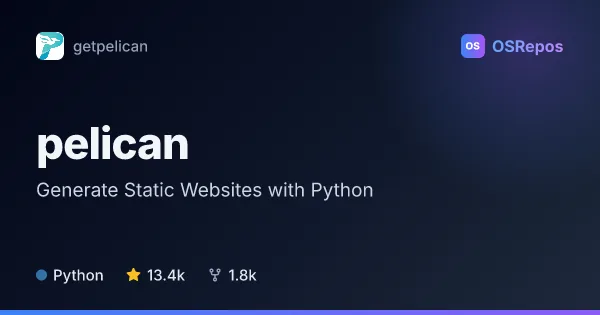
pelican: Generate Static Websites with Python
Pelican is a Python static site generator for building websites from Markdown, reStructuredText, and HTML files. It creates static output for hosting without a database or server-side application, and supports themes, feeds, plugins, and multilingual content.

Hugo: Build Fast Static Websites
Hugo is a fast, flexible static site generator built in Go. It turns content, templates, and assets into websites, with multilingual support and built-in development serving for platforms including macOS, Linux, Windows, and BSD.
| pelican | Hugo | |
|---|---|---|
| Language | Python | Go |
| License | AGPL-3.0 | Apache-2.0 |
| Stars | 13.4k | 90.2k |
| Forks | 1.8k | 8.4k |
| Last analyzed | Oct 16, 2026 | Oct 25, 2026 |
Key differences
- pelican is written in Python; hugo is written in Go.
- pelican supports Markdown, reStructuredText, and HTML input, plus articles and static pages. hugo emphasizes flexible content structures, taxonomies, and templates.
- pelican uses Jinja2 themes and offers plugins, feeds, syntax highlighting, and import options for WordPress, Dotclear, or RSS. hugo includes an embedded preview server, image processing, and CSS, Sass, JavaScript, and Tailwind CSS asset workflows.
- pelican is licensed under AGPL-3.0; hugo is licensed under Apache-2.0.
- pelican reports 13.3k stars and 1.8k forks, while hugo reports 90k stars and 8.4k forks.
- hugo offers editions with optional direct cloud deployment and extended Sass support; pelican's workflow includes command-line integration with version control and web hooks.
Choose pelican if you…
- prefer a Python-based publishing workflow for Markdown, reStructuredText, or HTML.
- want Jinja2 themes, plugins, feeds, or content import options.
- need multilingual publishing and selective output writing for rebuilds.
Choose Hugo if you…
- want a Go-based generator with an embedded development server for previews.
- need built-in image processing or workflows for CSS, Sass, JavaScript, or Tailwind CSS.
- want to organize multilingual content with taxonomies or share project resources through Hugo Modules.
Compare the numbers side by side, or add more projects
This comparison is generated with AI from the OSRepos analyses of both projects. Always check each project's repository and documentation before choosing.