zero vs grok-build
Terminal coding agents compared
zero and grok-build are terminal coding agents that inspect and edit code, run commands, and support headless workflows for scripts or CI. zero emphasizes configurable permissions, local sessions, and a range of hosted or local model providers; grok-build adds web search and editor integration through ACP.
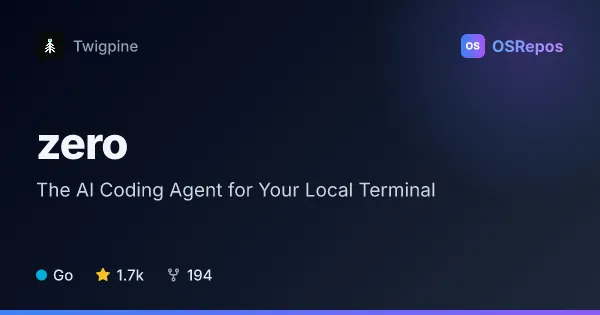
zero: Run a Local Terminal Coding Agent
Zero is a Go-based terminal coding agent that can inspect and edit repositories, run commands, and work with many hosted or local models. It suits developers who want scriptable coding assistance with local sessions and explicit controls over side effects.
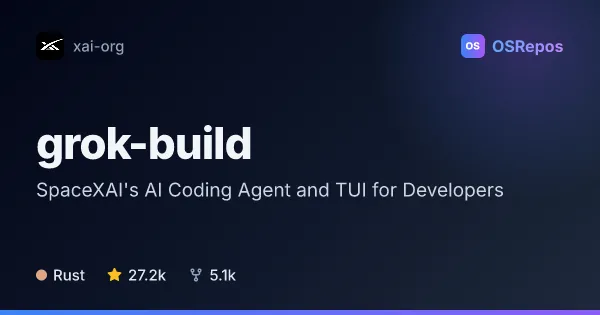
grok-build: Code with an Interactive Terminal AI Agent
Grok Build is a Rust-based coding agent that works in a full-screen terminal interface or in headless scripts and CI. It can inspect and edit a codebase, run shell commands, search the web, and manage longer tasks.
| zero | grok-build | |
|---|---|---|
| Language | Go | Rust |
| License | MIT | Apache-2.0 |
| Stars | 1.7k | 27.2k |
| Forks | 194 | 5.1k |
| Last analyzed | Oct 3, 2026 | Oct 3, 2026 |
Key differences
- zero is written in Go and licensed under MIT; grok-build is written in Rust and licensed under Apache-2.0.
- zero supports hosted providers, local model services, and compatible endpoints; grok-build's description focuses on its agent runtime and tools.
- zero offers permission controls and sandbox policies for file writes, shell commands, network access, and additional directories; grok-build highlights web search, workspace tools, and checkpoints.
- zero provides searchable, resumable, forkable, and rewindable local sessions; grok-build supports longer tasks through its runtime and workspace tools.
- zero supports both an interactive TUI and headless `zero exec` with text, JSON, and stream-JSON I/O; grok-build supports a full-screen UI with mouse interaction and headless workflows.
- grok-build can connect to editors through ACP, while zero's listed integration and extension options include MCP servers, skills, plugins, hooks, and subagents.
Choose zero if you…
- need explicit permission and sandbox controls over agent actions.
- want to choose between hosted models, local model services, and compatible endpoints.
- need local sessions or structured headless I/O for scripts and CI.
Choose grok-build if you…
- want to connect an agent to editors through ACP.
- need web search as part of terminal coding workflows.
- prefer a full-screen terminal interface with mouse interaction and tools for longer tasks.
This comparison is generated with AI from the OSRepos analyses of both projects. Always check each project's repository and documentation before choosing.