taOS vs ouroboros
Self-hosted AI agents with different priorities
taOS provides a local-first platform for managing agents, memory, files, and messaging across devices. ouroboros is a persistent agent for desktop or headless use, focused on external projects, specialist-agent coordination, and reviewed self-modification.
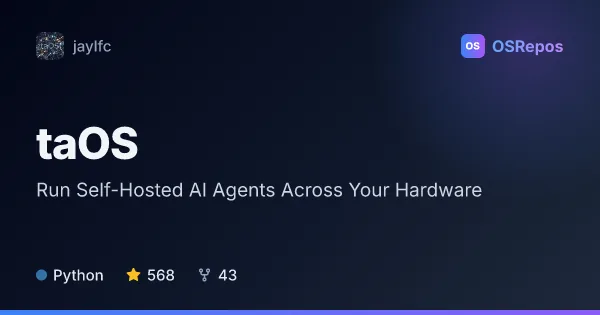
taOS: Run Self-Hosted AI Agents Across Your Hardware
taOS is a self-hosted AI agent platform built around taOSmd memory, with chat, files, and agents kept on hardware you control. It runs across devices including Raspberry Pi, Orange Pi, Apple Silicon, PCs, and Android, with cloud models optional.
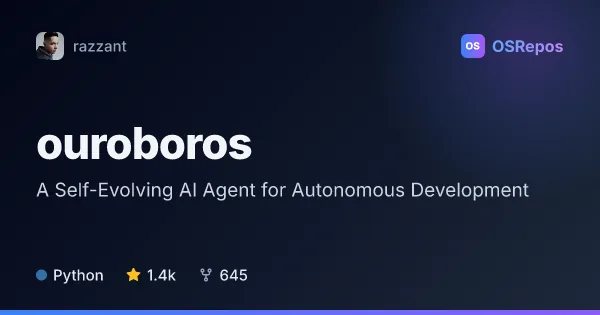
ouroboros: Run a Persistent, Self-Modifying AI Agent
Ouroboros is a Python AI agent for desktop or headless use, designed to retain identity and memory across tasks and restarts. It can work in external projects, coordinate specialist agents, and evolve its own implementation through reviewed changes.
| taOS | ouroboros | |
|---|---|---|
| Language | Python | Python |
| License | AGPL-3.0 | MIT |
| Stars | 568 | 1.4k |
| Forks | 43 | 645 |
| Last analyzed | Oct 19, 2026 | Oct 3, 2026 |
Key differences
- taOS manages agent memory, files, channels, and configuration separately from the execution framework; ouroboros maintains its own persistent identity and can evolve its implementation through reviewed changes.
- taOS is designed to combine supported devices in a cluster; ouroboros runs as a desktop app or headless CLI and can work in separate project folders.
- taOS offers connectors, shared workspaces, scheduled tasks, and a web desktop; ouroboros offers project rooms, specialist-agent coordination, and extensions such as skills and MCP tools.
- taOS uses the AGPL-3.0 license, while ouroboros uses the MIT license.
- taOS is labeled beta, with some flows still being smoothed out and many model catalog manifests not tested on real hardware; ouroboros flags Android support as experimental and notes added complexity from persistent memory and autonomous evolution.
Choose taOS if you…
- want a platform to manage agents, memory, files, and messaging across hardware you control.
- need framework-agnostic agent management or a cluster that can combine supported devices.
- prefer a web desktop with shared workspaces, scheduled tasks, and messaging connectors.
Choose ouroboros if you…
- want an agent to work in external project folders and return reviewable changes.
- need persistent identity and memory across tasks, with the option to coordinate specialist agents.
- want to explore reviewed self-modification and choose between remote model APIs and local GGUF inference.
Compare the numbers side by side, or add more projects
This comparison is generated with AI from the OSRepos analyses of both projects. Always check each project's repository and documentation before choosing.