cq vs deja-vu
Shared memory for coding agents compared
cq and deja-vu both help coding agents reuse knowledge across sessions. cq stores structured lessons that agents can query and contribute, while deja-vu indexes existing session histories for local search and recall.
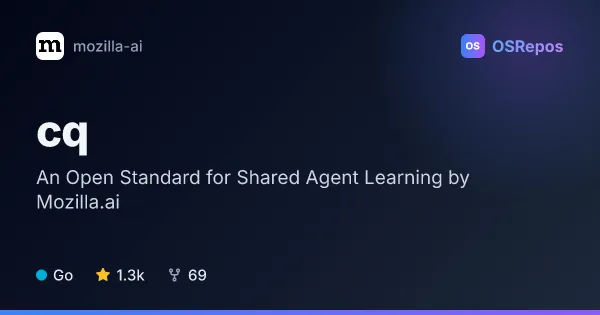
cq: Share Collective Learning Between AI Agents
cq is a knowledge store and workflow for coding agents to query, contribute, and validate reusable lessons. It helps teams and individual developers avoid repeating debugging work across agent sessions and machines.
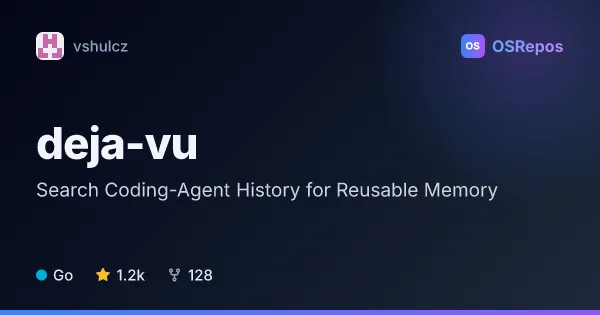
deja-vu: Search Coding-Agent History for Reusable Memory
deja-vu is a Go-based local memory tool that indexes existing session history from Claude Code, Codex, Cursor and 39 more coding agents. It provides search, MCP recall and hooks without requiring an LLM, so agents can reuse earlier decisions and fixes.
| cq | deja-vu | |
|---|---|---|
| Language | Go | Go |
| License | Apache-2.0 | MIT |
| Stars | 1.3k | 1.2k |
| Forks | 69 | 128 |
| Last analyzed | Oct 3, 2026 | Oct 19, 2026 |
Key differences
- cq centers on reviewed knowledge units; deja-vu builds memory from existing agent session files and updates its index incrementally.
- cq supports local SQLite, Mozilla.ai's hosted service, and self-hosted deployment; deja-vu focuses on a local index with optional embedding services for semantic search.
- cq provides MCP tools for querying and managing lessons, plus optional session reflection; deja-vu offers search, MCP recall, hooks, and commands for inspecting prior work.
- cq is licensed under Apache-2.0, while deja-vu is licensed under MIT.
- cq warns that its 0.x releases may include breaking changes; deja-vu is changing quickly and notes that most contributions come from one person.
- cq provides integrations for several coding-agent hosts; deja-vu indexes histories from Claude Code, Codex, Cursor, and many more agents.
Choose cq if you…
- need agents to query, propose, and validate shared lessons.
- want a local store with the option to use a hosted or self-hosted service.
- prefer structured knowledge that can be reviewed before it is shared with agents.
Choose deja-vu if you…
- want to search existing agent histories without writing memory notes first.
- need local CLI, MCP, or hook-based recall across supported coding agents.
- want commands for finding prior fixes, decisions, and project context in session history.
Compare the numbers side by side, or add more projects
This comparison is generated with AI from the OSRepos analyses of both projects. Always check each project's repository and documentation before choosing.