openinterpreter vs grok-build
Rust terminal coding agents compared
openinterpreter and grok-build are Rust-based coding agents for working with code from a terminal, and both support ACP integrations. openinterpreter emphasizes low-cost models and compatibility with several agent harnesses, while grok-build adds headless workflows for scripts and CI, web search, and tools for longer tasks.
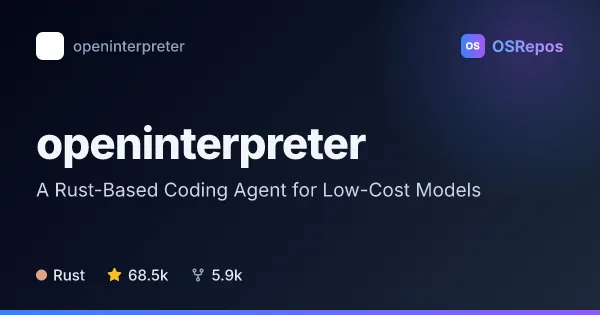
openinterpreter: Run Coding Agents in Your Terminal
Open Interpreter is a Rust-based terminal coding agent designed to get useful results from low-cost language models. It supports multiple agent harnesses and connects to ACP-compatible editors and Codex SDK clients.
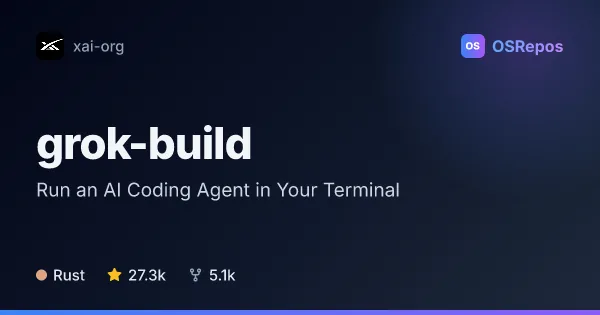
grok-build: Run an AI Coding Agent in Your Terminal
Grok Build is a Rust-based terminal coding agent that can inspect and edit a codebase, run shell commands, and handle longer tasks. It supports interactive use, scripting, and editor integration through ACP.
| openinterpreter | grok-build | |
|---|---|---|
| Language | Rust | Rust |
| License | Apache-2.0 | Apache-2.0 |
| Stars | 68.5k | 27.3k |
| Forks | 5.9k | 5.1k |
| Last analyzed | Oct 3, 2026 | Oct 9, 2026 |
Key differences
- openinterpreter focuses on running coding workflows with low-cost models; grok-build highlights code inspection and editing, shell commands, web search, and longer tasks.
- openinterpreter supports multiple agent harnesses, including Kimi Code, Qwen Code, DeepSeek TUI, and Claude Code variants; grok-build describes an extensible runtime with configuration, MCP servers, skills, plugins, and hooks.
- openinterpreter supports native sandboxing on macOS, Linux, and Windows; grok-build lists macOS and Linux as supported build hosts, with Windows builds described as best-effort and untested.
- openinterpreter supports the Codex exec protocol and a Codex SDK binary override; grok-build supports interactive and headless use, including scripts and CI.
- Both projects use Rust and Apache-2.0 licensing; openinterpreter lists 68.5k stars and 5.9k forks, while grok-build lists 27.2k stars and 5.1k forks.
Choose openinterpreter if you…
- want to run coding workflows with low-cost models and switch among supported agent harnesses.
- need compatibility with the Codex exec protocol or a Codex SDK binary override.
- want native sandboxing across macOS, Linux, and Windows.
Choose grok-build if you…
- need to run coding-agent workflows interactively or headlessly in scripts and CI.
- want built-in web search and runtime tools for longer coding tasks.
- plan to extend an agent with documented configuration, MCP servers, skills, plugins, or hooks.
Compare the numbers side by side, or add more projects
This comparison is generated with AI from the OSRepos analyses of both projects. Always check each project's repository and documentation before choosing.