masscan vs RustScan
TCP port scanners compared
masscan and RustScan both find open TCP ports, but they target different stages and scales of scanning. masscan is built for high-rate probes across large address ranges, while RustScan focuses on quickly finding ports and handing them to Nmap or scripts for follow-up.
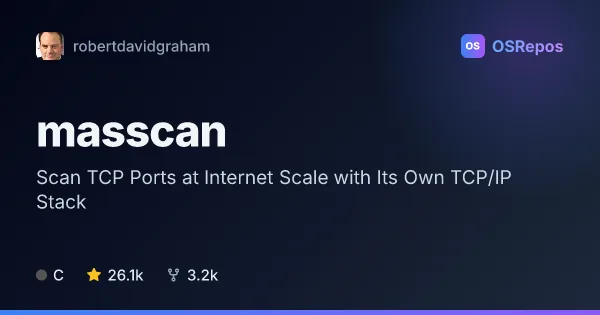
masscan: Scan TCP Ports at Internet Scale with Its Own TCP/IP Stack
Masscan is a C-based, asynchronous TCP port scanner built around its own ad hoc TCP/IP stack, designed to probe large address ranges quickly. It offers Nmap-like options and runs on Linux, Windows, macOS, and other systems.
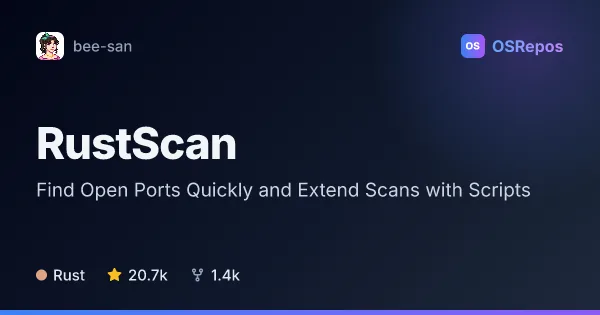
RustScan: Find Open Ports Quickly and Extend Scans with Scripts
RustScan is a Rust-built port scanner designed to find open ports quickly and hand results to tools such as Nmap. It supports scripting with Python, Lua, and Shell, plus IPv6, CIDR ranges, and file input.
| masscan | RustScan | |
|---|---|---|
| Language | C | Rust |
| License | AGPL-3.0 | GPL-3.0 |
| Stars | 26.1k | 20.7k |
| Forks | 3.2k | 1.4k |
| Last analyzed | Nov 7, 2026 | Nov 8, 2026 |
Key differences
- masscan is designed for broad, high-rate scans across large IP and port ranges; RustScan focuses on quickly identifying open ports for further analysis.
- masscan uses its own ad hoc TCP/IP stack and supports asynchronous probes, randomized probe order, and sharding; RustScan offers adaptive scanning and scripting in Python, Lua, or Shell.
- masscan is written in C and licensed under AGPL-3.0; RustScan is written in Rust and licensed under GPL-3.0.
- masscan can optionally collect basic service banners; RustScan can pipe discovered ports to Nmap or run custom scripts.
- Both support IPv6 and are not archived. masscan's code is mostly from one person, while RustScan's contributions are not concentrated in a single person.
- Both have had no release in over a year; RustScan's issue closure is slow by the measured median.
Choose masscan if you…
- need to scan large address and port ranges with asynchronous, high-rate probes.
- want to shard scans across machines, adapters, or source addresses.
- need output in formats such as XML, JSON, or grepable text, or optional basic service banners.
Choose RustScan if you…
- want to find open ports quickly before running Nmap follow-up checks.
- need to trigger Python, Lua, or Shell scripts when ports are found.
- want to scan IPv6 or CIDR targets, or provide targets from a file.
Compare the numbers side by side, or add more projects
This comparison is generated with AI from the OSRepos analyses of both projects. Always check each project's repository and documentation before choosing.