Inbox Zero: Your AI Personal Assistant for Email Productivity
This repository profile is provided by osrepos.com, an open source repository discovery platform.

Summary
Inbox Zero is an open-source AI personal assistant designed to help users achieve inbox zero quickly. It intelligently organizes emails, drafts replies, and tracks follow-ups, offering a powerful and customizable solution for managing email communication. This project aims to significantly boost productivity by minimizing time spent in the inbox.
Repository Information
Topics
Click on any tag to explore related repositories
Use at your own risk
OSRepos shares public repositories for knowledge and discovery only. Any installation, execution, configuration, or use of code from these repositories is the user's own responsibility. Always review the repository, source code, dependencies, licenses, and security implications before running or installing anything. OSRepos is not responsible for issues, damages, or losses resulting from third-party repositories.
Introduction
Inbox Zero is an open-source AI personal assistant for email, meticulously crafted to help you achieve and maintain a clean inbox. It leverages artificial intelligence to organize your emails, pre-draft replies in your unique tone, track follow-ups, and even block cold emails. Designed as a customizable and secure alternative, Inbox Zero empowers users to focus on what truly matters by streamlining their email management.
Installation
To get started with Inbox Zero, developers can self-host the application. You'll need Node.js (>= 18.0.0), pnpm (>= 8.6.12), and Docker Desktop (optional but recommended).
The basic setup involves:
- Cloning the repository.
- Setting up environment variables for Google OAuth, Microsoft OAuth, and an LLM provider (e.g., OpenAI, Anthropic, or Ollama).
- Configuring a PostgreSQL database and Redis instance (Docker Compose can be used for local setup).
- Running database migrations and starting the application.
For a complete guide on deploying Inbox Zero to a VPS using Docker, see the Docker Self-Hosting Guide. Detailed setup instructions, including external service configurations, are available in the official README.
# Example commands
pnpm install
pnpm prisma migrate dev
pnpm run dev
Examples
Inbox Zero offers a comprehensive suite of features to enhance your email workflow. The AI Personal Assistant intelligently categorizes emails and suggests replies tailored to your style. Reply Zero helps you track pending responses and those awaiting replies, ensuring nothing falls through the cracks. The Bulk Unsubscriber allows one-click management of unwanted subscriptions, while Smart Categories automatically organize senders.
For a visual demonstration of these features in action, you can watch the demo video provided in the repository's README.
Why use Inbox Zero?
Inbox Zero's mission is clear: to help you spend less time in your inbox, freeing you to focus on more important tasks. Its AI-powered features, such as custom "Cursor Rules" for email handling, smart categorization, and cold email blocking, provide a comprehensive solution for email overload. Being open-source, it offers transparency, flexibility, and the ability to self-host for enhanced privacy and control, making it a robust choice for productivity enthusiasts seeking a powerful and customizable email management tool.
Links
- GitHub Repository: https://github.com/elie222/inbox-zero
- Official Website: https://www.getinboxzero.com
- Discord Community: https://www.getinboxzero.com/discord
- Documentation: https://docs.getinboxzero.com
Related repositories
Similar repositories that may be relevant next.
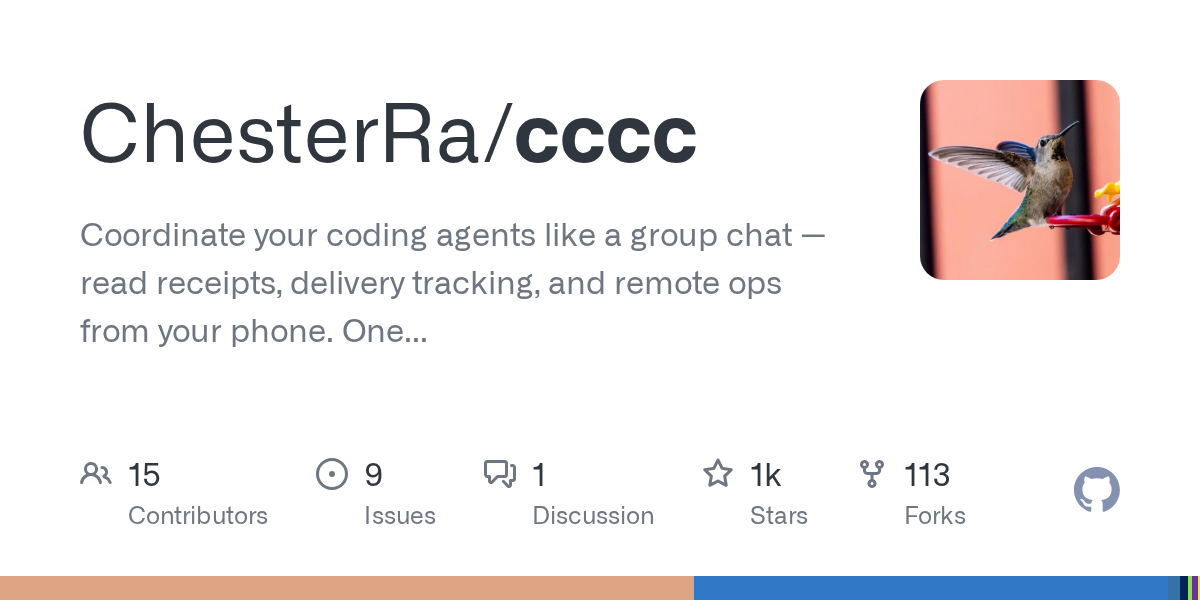
CCCC: Coordinate Your Coding Agents Like a Group Chat
September 29, 2026
CCCC is a production-minded orchestrator designed to coordinate coding agents like a group chat, offering features such as read receipts, delivery tracking, and remote operations from your phone. It enables 24/7 workflow for multi-agent teams with a single `pip install` and zero infrastructure. This tool helps manage diverse AI runtimes, ensuring persistent collaboration across different machines and trusted working groups.
AI Session Search: Ultra-Fast AI Agent Session Analysis
September 29, 2026
AI Session Search (aise) is an ultra-fast, Rust-powered tool designed for searching and analyzing local AI agent coding sessions. It seamlessly integrates and indexes nine different session formats, including those from Claude, Codex, Cursor, and Gemini CLI. This powerful utility enables developers to quickly recover context, track agent behavior, and efficiently manage their AI-generated code history.
Pydantic AI Harness: Enhancing Your AI Agents with Robust Capabilities
September 28, 2026
Pydantic AI Harness is the official capability and harness library for Pydantic AI, designed to extend agents for complex, long-running tasks. It provides a modular system of "capabilities" for functionalities like file system interaction, web research, memory, and sub-agent delegation. This library enables developers to build sophisticated and durable AI agents with ease.
Router: Optimize AI Model Selection and Costs for Agentic Systems
September 28, 2026
The Weave-OS Router is an intelligent model router for agentic systems, optimizing AI model selection for every request. It acts as a drop-in proxy for major AI providers, routing prompts to the most suitable model in under 50ms. This solution helps users significantly cut costs, often by 40-70%, simply by changing an endpoint.
Source repository
Open the original repository on GitHub.
13 counted GitHub visits