Microsandbox: Secure, Self-Hosted Sandboxes for AI Agents and Untrusted Code
This repository profile is provided by osrepos.com, an open source repository discovery platform.

Summary
Microsandbox is an open-source project providing self-hosted, hardware-isolated sandboxes designed for securely executing untrusted user and AI code. It offers a unique balance of strong isolation, instant startup times, and OCI compatibility, addressing the challenges of traditional container and VM solutions. Built in Rust, Microsandbox is ideal for developers building agentic AI applications requiring robust and flexible execution environments.
Repository Information
Topics
Click on any tag to explore related repositories
Use at your own risk
OSRepos shares public repositories for knowledge and discovery only. Any installation, execution, configuration, or use of code from these repositories is the user's own responsibility. Always review the repository, source code, dependencies, licenses, and security implications before running or installing anything. OSRepos is not responsible for issues, damages, or losses resulting from third-party repositories.
Introdução
Microsandbox é um projeto open-source inovador desenvolvido pela zerocore-ai, que oferece sandboxes auto-hospedadas e isoladas por hardware para a execução segura de código de usuário e IA não confiável. Construído em Rust, ele visa superar as limitações de soluções tradicionais como contêineres e máquinas virtuais, fornecendo uma combinação de forte isolamento, tempos de inicialização instantâneos e compatibilidade OCI. Isso o torna uma espinha dorsal ideal para a web agêntica, permitindo ambientes de execução rápidos, seguros e flexíveis para agentes de IA e outras cargas de trabalho exigentes. Com 4498 estrelas e 208 forks, está ganhando uma tração significativa na comunidade de desenvolvedores.
Instalação
Para começar com o Microsandbox, siga estes passos simples:
-
Baixe
microsandbox:curl -sSL https://get.microsandbox.dev | sh -
Inicie o servidor:
msb server start --dev -
Puxe uma imagem de ambiente (Opcional):
msb pull microsandbox/python
Exemplos
Microsandbox oferece maneiras flexíveis de gerenciar e acessar sandboxes, incluindo utilitários de linha de comando e SDKs para várias linguagens.
Exemplos de Linha de Comando:
-
Sandbox Temporário: Para tarefas únicas, crie um ambiente limpo que não deixa rastros na saída.
msx python # ou `msb exe --image python` -
Sandboxes em todo o Sistema: Execute sandboxes de longa duração configuradas automaticamente como executáveis em todo o sistema.
msi python py-data # ou `msb install --image alpine py-data`
py-data # De qualquer diretório, execute a sandbox
Exemplos de SDK (BETA):
Microsandbox fornece SDKs para integrar capacidades de sandboxing diretamente em suas aplicações.
-
Python:
import asyncio from microsandbox import PythonSandbox async def main(): async with PythonSandbox.create(name="test") as sb: exec = await sb.run("name = 'Python'") exec = await sb.run("print(f'Hello {name}!')") print(await exec.output()) # prints Hello Python! asyncio.run(main()) -
JavaScript:
import { NodeSandbox } from "microsandbox"; async function main() { const sb = await NodeSandbox.create({ name: "test" }); try { let exec = await sb.run("var name = 'JavaScript'"); exec = await sb.run("console.log(`Hello ${name}!`)"); console.log(await exec.output()); // prints Hello JavaScript! } finally { await sb.stop(); } } main().catch(console.error); -
Rust:
use microsandbox::{SandboxOptions, PythonSandbox};

#[tokio::main]
async fn main() -> Result<(), Box> {
    let options = SandboxOptions::builder().name("test").build();
    let mut sb = PythonSandbox::create(options).await?;

    let exec = sb.run(r#"name = "Rust""#).await?;
    let exec = sb.run(r#"print(f"Hello {name}!")"#).await?;

    println!("{}", exec.output().await?); // prints Hello Rust!

    sb.stop().await?;

    Ok(())
}
Porquê usar Microsandbox
Microsandbox se destaca por oferecer uma combinação atraente de recursos que abordam necessidades críticas no desenvolvimento de software moderno, especialmente para aplicações de IA e agênticas:
-
Forte Isolamento: Atinge isolamento de VM em nível de hardware usando microVMs, garantindo que o código não confiável seja executado em um ambiente altamente seguro.
-
Inicialização Instantânea: Com tempos de inicialização abaixo de 200 ms, o Microsandbox fornece ambientes de execução quase instantâneos, cruciais para aplicações dinâmicas e responsivas.
-
Compatível com OCI: Pode executar imagens de contêiner padrão, permitindo que os desenvolvedores aproveitem os ecossistemas existentes de Docker e OCI.
-
Auto-Hospedado: Implante o Microsandbox dentro de sua própria infraestrutura, dando-lhe total autonomia e controle sobre seus ambientes de execução.
-
Pronto para IA: Integra-se perfeitamente com fluxos de trabalho de agentes e IA via MCP, tornando-o uma ferramenta poderosa para construir sistemas de IA seguros e escaláveis.
Seu design como a espinha dorsal de execução da web agêntica destaca seu foco em velocidade, segurança e flexibilidade para a próxima geração de aplicações impulsionadas por IA.
Links
- Repositório GitHub: https://github.com/zerocore-ai/microsandbox
- Documentação Oficial: https://docs.microsandbox.dev
- Comunidade Discord: https://discord.gg/T95Y3XnEAK
Related repositories
Similar repositories that may be relevant next.
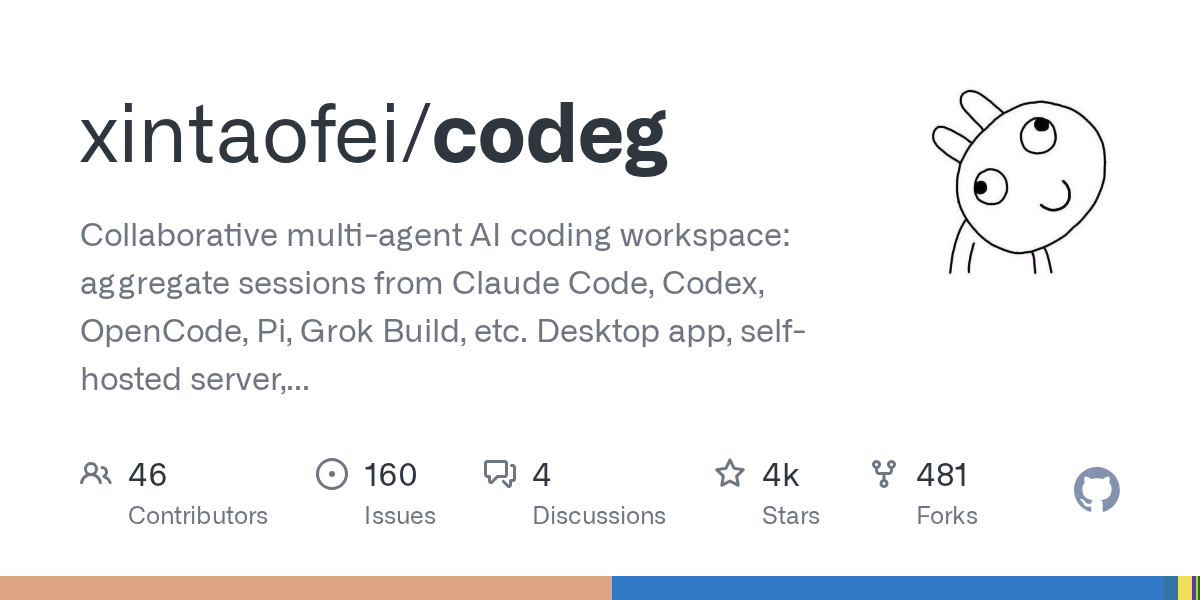
Codeg: Collaborative Multi-Agent AI Coding Workspace for Developers
September 30, 2026
Codeg (Code Generation) is an innovative multi-agent AI coding workspace built in Rust, designed to unify and enhance the developer experience. It aggregates sessions from various AI coding agents like Claude Code, Codex, and Grok Build into one searchable environment, facilitating seamless collaboration and task management. Available as a desktop app, self-hosted server, or Docker container, Codeg also offers native iOS and Android clients for on-the-go productivity.
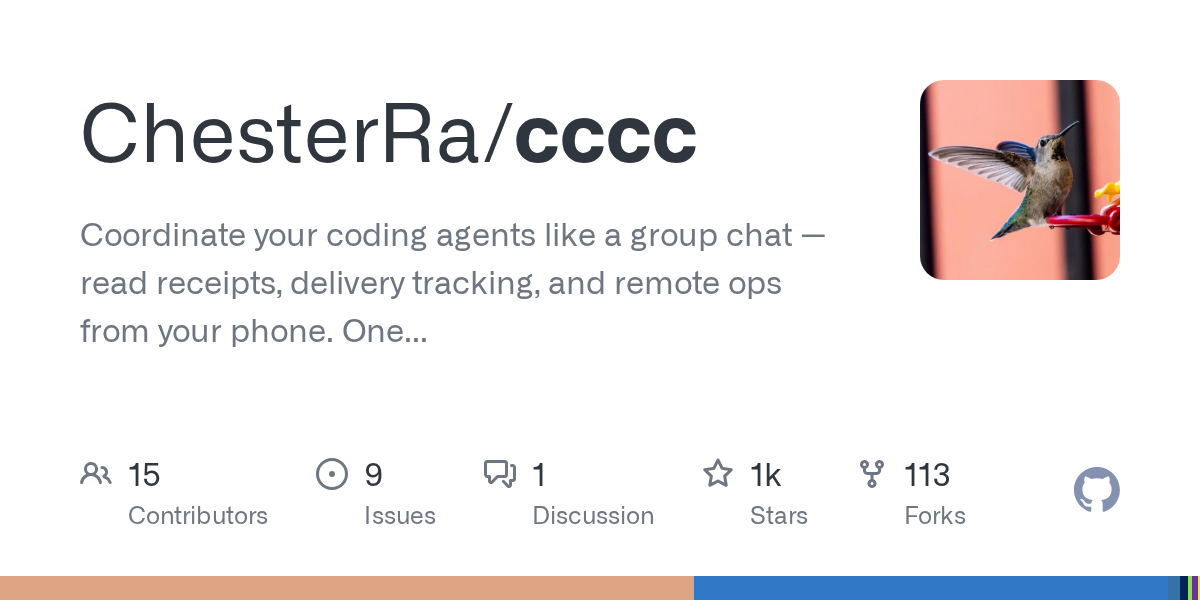
CCCC: Coordinate Your Coding Agents Like a Group Chat
September 29, 2026
CCCC is a production-minded orchestrator designed to coordinate coding agents like a group chat, offering features such as read receipts, delivery tracking, and remote operations from your phone. It enables 24/7 workflow for multi-agent teams with a single `pip install` and zero infrastructure. This tool helps manage diverse AI runtimes, ensuring persistent collaboration across different machines and trusted working groups.
AI Session Search: Ultra-Fast AI Agent Session Analysis
September 29, 2026
AI Session Search (aise) is an ultra-fast, Rust-powered tool designed for searching and analyzing local AI agent coding sessions. It seamlessly integrates and indexes nine different session formats, including those from Claude, Codex, Cursor, and Gemini CLI. This powerful utility enables developers to quickly recover context, track agent behavior, and efficiently manage their AI-generated code history.
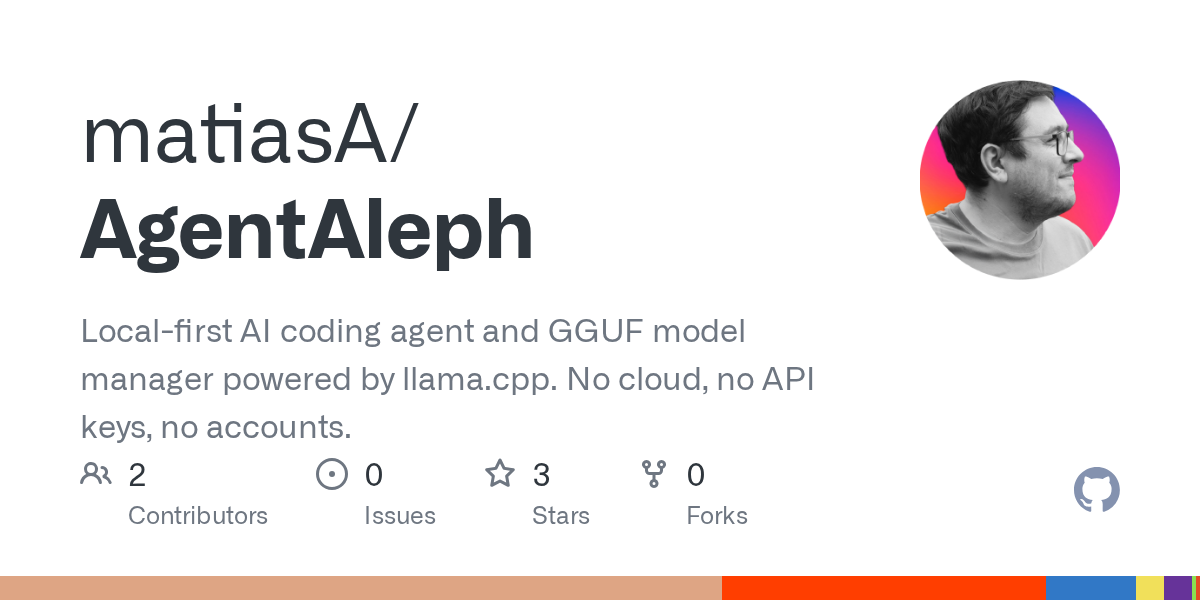
AgentAleph: Local-First AI Coding Agent and GGUF Model Manager
September 25, 2026
AgentAleph is a desktop application that combines a local-first AI coding agent with a GGUF model manager. It allows users to download, load, and manage local large language models, and then use an AI agent to interact with their projects, all without relying on cloud services or API keys. This tool emphasizes privacy and offline capability, running models directly on your machine.
Source repository
Open the original repository on GitHub.
17 counted GitHub visits