LightLLM: A Lightweight and High-Speed LLM Inference and Serving Framework
This repository profile is provided by osrepos.com, an open source repository discovery platform.
Summary
LightLLM is a Python-based framework designed for efficient Large Language Model (LLM) inference and serving. It stands out for its lightweight architecture, impressive scalability, and high-speed performance, making it an excellent choice for deploying LLMs. The framework integrates and builds upon the strengths of various leading open-source implementations to deliver optimized results.
Repository Information
Topics
Click on any tag to explore related repositories
Use at your own risk
OSRepos shares public repositories for knowledge and discovery only. Any installation, execution, configuration, or use of code from these repositories is the user's own responsibility. Always review the repository, source code, dependencies, licenses, and security implications before running or installing anything. OSRepos is not responsible for issues, damages, or losses resulting from third-party repositories.
Introduction
LightLLM is an innovative, Python-based framework specifically engineered for the inference and serving of Large Language Models (LLMs). With a strong focus on efficiency, LightLLM is celebrated for its lightweight design, remarkable scalability, and high-speed performance, making it an excellent choice for deploying LLMs. It intelligently integrates and leverages the best features from well-regarded open-source projects such as FasterTransformer, TGI, vLLM, and FlashAttention to provide a robust and optimized solution for LLM deployment. The project has garnered significant attention, boasting over 4,100 stars on GitHub, reflecting its growing popularity and utility within the AI community.
Installation
Getting started with LightLLM is straightforward. The project provides comprehensive documentation to guide users through the installation process. For detailed instructions on how to set up LightLLM in your environment, please refer to the official installation guide:
Examples
LightLLM offers various resources to help users quickly understand and implement the framework. From quick start guides to in-depth tutorials, you can find practical examples to deploy and utilize LLMs effectively. Explore the following official documentation links for hands-on examples:
Why Use LightLLM?
LightLLM offers compelling advantages for anyone looking to deploy LLMs efficiently:
- Exceptional Performance: It is engineered for speed, achieving leading performance metrics, including being the fastest DeepSeek-R1 serving solution on a single H200 machine (as of v1.0.0 release).
- Lightweight and Scalable: Its design prioritizes being lightweight while ensuring easy scalability, crucial for handling varying loads in LLM serving.
- Python-based Simplicity: Being entirely Python-based, it offers a familiar and accessible development experience for a wide range of developers.
- Community and Research Backing: LightLLM is actively used and referenced in numerous prominent projects and academic works from institutions like Peking University, Microsoft, and Ant Group, demonstrating its reliability and advanced capabilities. It also has an active Discord community for support and discussion.
- Cutting-edge Features: The framework continuously integrates advanced features, such as Prefix KV Cache Transfer and innovative request schedulers, often backed by published research papers.
Links
- GitHub Repository: ModelTC/LightLLM
- Official Documentation (English): LightLLM Docs
- LightLLM Blogs: Technical Blogs
- Discord Community: Join Discord
Related repositories
Similar repositories that may be relevant next.
dify-official-plugins: Extending Dify with AI Models, Tools, and Agent Strategies
August 18, 2026
The `dify-official-plugins` repository hosts a collection of official plugins for Dify, an open-source platform for developing LLM-powered AI applications. These plugins, including models, tools, agent strategies, and extensions, enhance Dify's capabilities and are maintained by the official Dify team. They are designed to help developers efficiently build, deploy, and manage AI-driven solutions.
Agent Skills: A Standardized Way to Give AI Agents New Capabilities
August 18, 2026
Agent Skills provides a lightweight, open format for extending AI agent capabilities with specialized knowledge and workflows. It allows packaging procedural knowledge and context into portable, version-controlled folders that agents load on demand. This enables agents to gain domain expertise, follow repeatable workflows, and reuse skills across various compatible AI tools.
A-MEM: Self-Evolving Memory for Coding Agents
August 17, 2026
A-MEM is an innovative self-evolving memory system designed for coding agents, organizing knowledge into a dynamic Zettelkasten-style graph. It allows memories to evolve and connect over time, enhancing an agent's ability to recall and utilize information effectively. This system offers both semantic and structural search capabilities for a richer knowledge base.
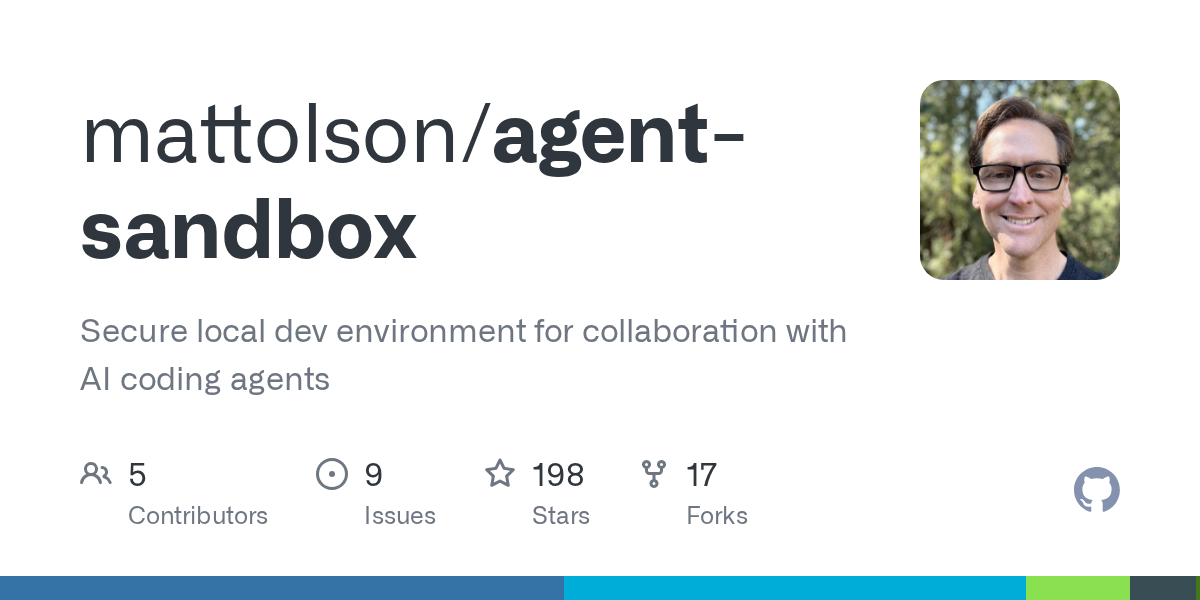
Agent Sandbox: Secure Local Development for AI Coding Agents
August 17, 2026
Agent Sandbox provides a robust and secure local development environment specifically designed for collaborating with AI coding agents. It ensures minimal filesystem access, configurable network egress policies, and secure secret injection, protecting your local machine from potentially risky agent operations. This project supports various AI agents and integrates seamlessly with both CLI and popular IDE devcontainer setups.
Source repository
Open the original repository on GitHub.
16 counted GitHub visits