systemctl-tui: A Fast TUI for systemd Services and Logs
This repository profile is provided by osrepos.com, an open source repository discovery platform.

Summary
systemctl-tui is a fast and simple Text User Interface (TUI) designed for interacting with systemd services and their logs. Written in Rust, it allows users to quickly browse service status, view logs, and manage services like starting, stopping, or restarting them, all from a convenient terminal interface.
Repository Information
Topics
Click on any tag to explore related repositories
Use at your own risk
OSRepos shares public repositories for knowledge and discovery only. Any installation, execution, configuration, or use of code from these repositories is the user's own responsibility. Always review the repository, source code, dependencies, licenses, and security implications before running or installing anything. OSRepos is not responsible for issues, damages, or losses resulting from third-party repositories.
Introduction
systemctl-tui offers a fast and intuitive Text User Interface (TUI) for managing systemd services and reviewing their logs. Developed in Rust, this utility aims to simplify common system administration tasks by providing a streamlined, interactive terminal experience. It allows users to efficiently browse service statuses, view real-time logs, and perform actions such as starting, stopping, restarting, or reloading services, as well as viewing and editing unit files.
Installation
systemctl-tui is primarily designed for Linux environments, though it can function on WSL if systemd is enabled. Multiple installation methods are available:
Binary Release
For a quick setup, you can use the automated install script. Always verify scripts before piping them into your shell:
curl https://raw.githubusercontent.com/rgwood/systemctl-tui/master/install.sh | bash
By default, the script installs the binary to $HOME/.local/bin. You can change this by setting the DIR environment variable.
From Source (Rust)
If you prefer to build from source, ensure you have Rust installed. Then, choose one of the following:
- Run
cargo install systemctl-tui --locked - Clone the repository and build:
git clone https://github.com/rgwood/systemctl-tui.git
cd systemctl-tui
cargo build --release
The release binary will be located at
target/release/systemctl-tui.
Distro Packages
systemctl-tui is also available through various distribution package managers:
- Arch Linux: Install from the official repositories:
sudo pacman -S systemctl-tui - Nix: A package is available and can be installed with:
nix-shell -p systemctl-tui
Optional Setup
Consider these optional steps for enhanced usability:
- Alias
systemctl-tuitostfor quicker access. - Create a symlink to use
systemctl-tuiwithsudo:sudo ln -s ~/.cargo/bin/systemctl-tui /usr/bin/systemctl-tui
Examples
systemctl-tui provides a comprehensive, interactive view of your systemd services. Upon launch, it presents a list of services, their current status, and allows for easy navigation. Users can select a service to view its detailed status and real-time logs in a dedicated panel. The interface supports common actions like starting, stopping, restarting, and reloading services with simple keybindings. It also facilitates viewing and editing the underlying unit files, making it a powerful tool for quick diagnostics and configuration adjustments. The integrated help screen, accessible within the TUI, clearly outlines all available commands and shortcuts.
Why Use It
For anyone regularly interacting with systemd services, systemctl-tui offers significant advantages over the traditional command-line systemctl utility. Its TUI provides an immediate visual overview of service statuses, eliminating the need to repeatedly type commands. The ability to view live logs, manage services, and edit unit files from a single, responsive interface greatly enhances productivity and simplifies troubleshooting. Written in Rust, it benefits from excellent performance and reliability, making it a robust addition to any Linux administrator's toolkit.
Links
- GitHub Repository: https://github.com/rgwood/systemctl-tui
- Crates.io: https://crates.io/crates/systemctl-tui
- GitHub Releases: https://github.com/rgwood/systemctl-tui/releases
- Repology Packaging Status: https://repology.org/project/systemctl-tui/versions
Related repositories
Similar repositories that may be relevant next.
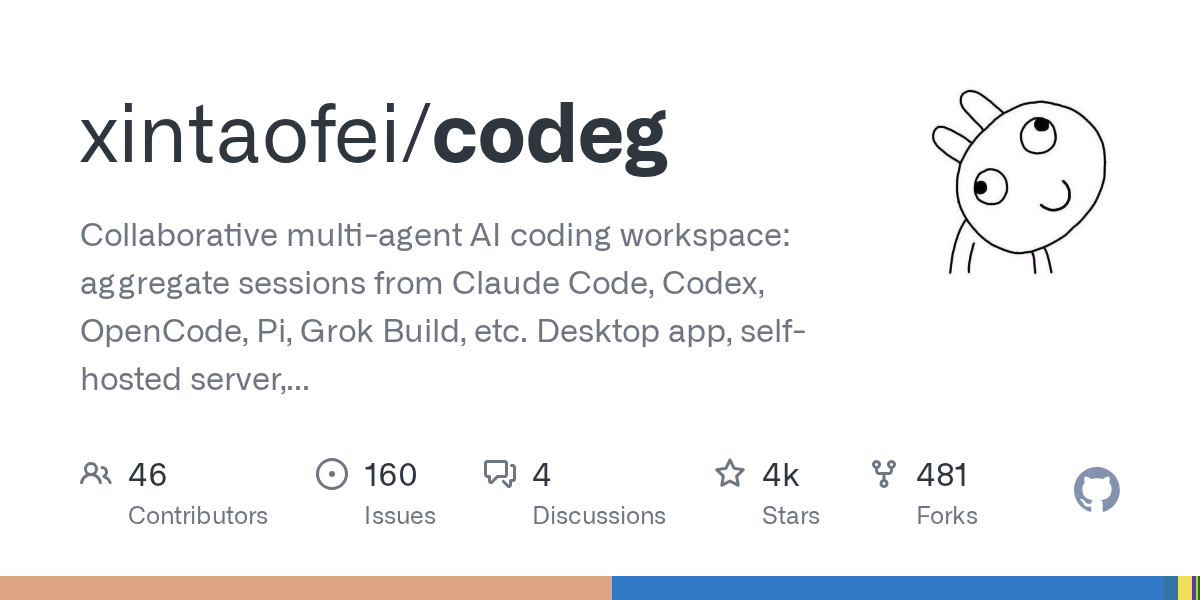
Codeg: Collaborative Multi-Agent AI Coding Workspace for Developers
September 30, 2026
Codeg (Code Generation) is an innovative multi-agent AI coding workspace built in Rust, designed to unify and enhance the developer experience. It aggregates sessions from various AI coding agents like Claude Code, Codex, and Grok Build into one searchable environment, facilitating seamless collaboration and task management. Available as a desktop app, self-hosted server, or Docker container, Codeg also offers native iOS and Android clients for on-the-go productivity.
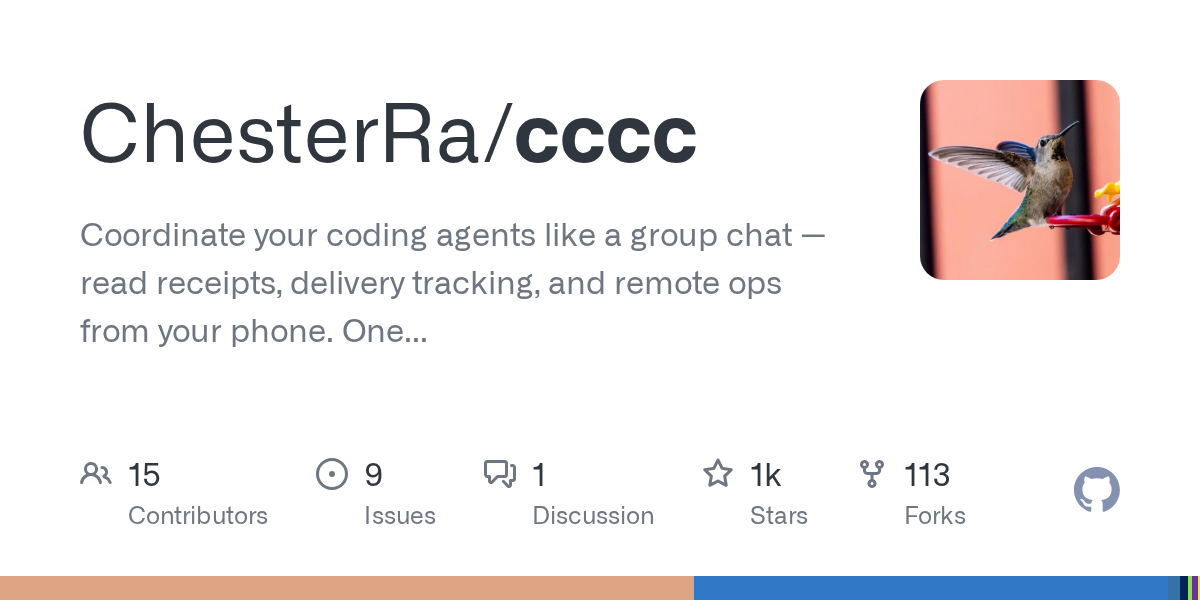
CCCC: Coordinate Your Coding Agents Like a Group Chat
September 29, 2026
CCCC is a production-minded orchestrator designed to coordinate coding agents like a group chat, offering features such as read receipts, delivery tracking, and remote operations from your phone. It enables 24/7 workflow for multi-agent teams with a single `pip install` and zero infrastructure. This tool helps manage diverse AI runtimes, ensuring persistent collaboration across different machines and trusted working groups.
AI Session Search: Ultra-Fast AI Agent Session Analysis
September 29, 2026
AI Session Search (aise) is an ultra-fast, Rust-powered tool designed for searching and analyzing local AI agent coding sessions. It seamlessly integrates and indexes nine different session formats, including those from Claude, Codex, Cursor, and Gemini CLI. This powerful utility enables developers to quickly recover context, track agent behavior, and efficiently manage their AI-generated code history.
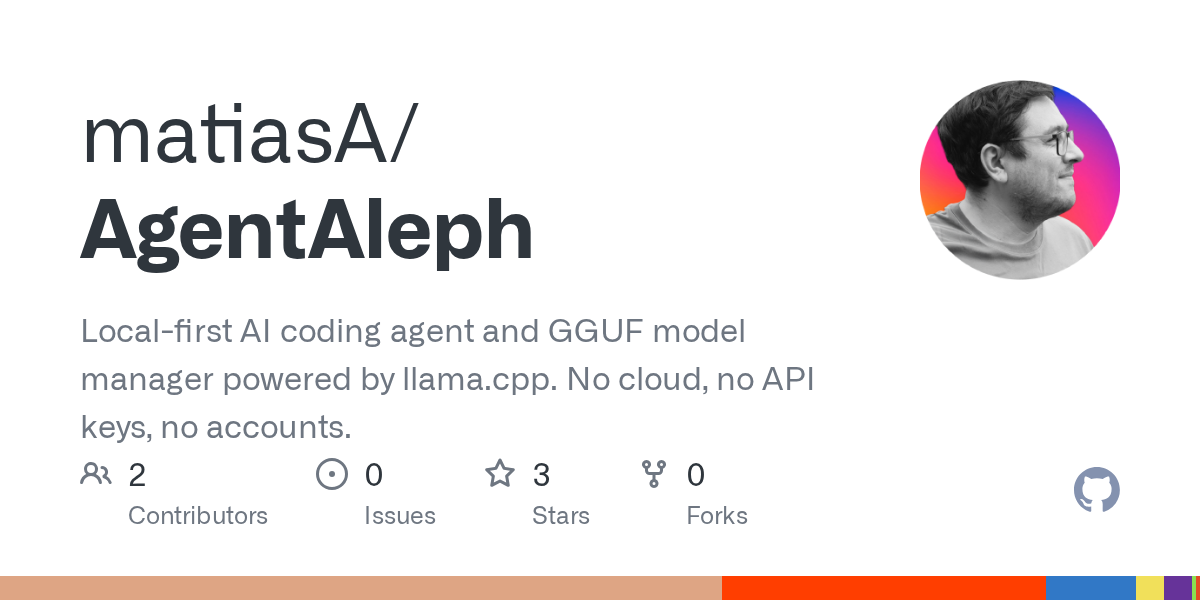
AgentAleph: Local-First AI Coding Agent and GGUF Model Manager
September 25, 2026
AgentAleph is a desktop application that combines a local-first AI coding agent with a GGUF model manager. It allows users to download, load, and manage local large language models, and then use an AI agent to interact with their projects, all without relying on cloud services or API keys. This tool emphasizes privacy and offline capability, running models directly on your machine.
Source repository
Open the original repository on GitHub.
20 counted GitHub visits