Leetcode Patterns: A Pattern-Based Approach to Technical Interview Prep
This repository profile is provided by osrepos.com, an open source repository discovery platform.
Summary
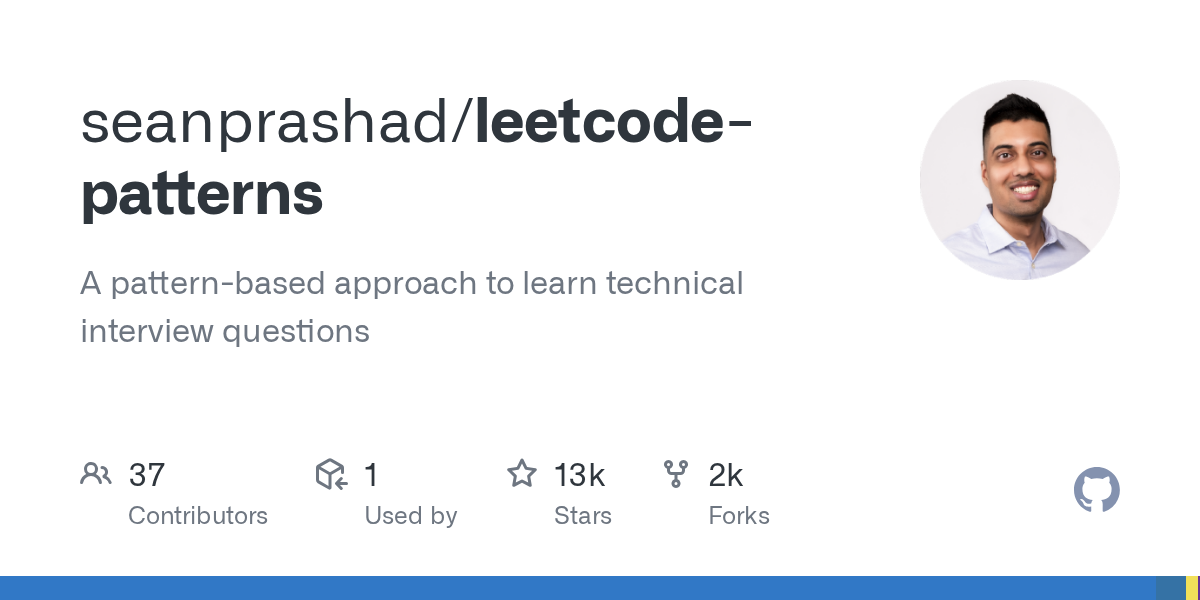
Leetcode Patterns is a highly-starred GitHub repository offering a structured, pattern-based approach to mastering technical interview questions. It helps individuals improve problem-solving skills by grouping LeetCode problems under specific subtopics, allowing for focused practice and application of common algorithms and data structures.
Repository Information
Topics
Click on any tag to explore related repositories
Use at your own risk
OSRepos shares public repositories for knowledge and discovery only. Any installation, execution, configuration, or use of code from these repositories is the user's own responsibility. Always review the repository, source code, dependencies, licenses, and security implications before running or installing anything. OSRepos is not responsible for issues, damages, or losses resulting from third-party repositories.
Introduction
Leetcode Patterns by seanprashad is a highly acclaimed GitHub repository, boasting over 13,000 stars and 2,000 forks. It offers a unique, pattern-based approach to mastering technical interview questions, making it an invaluable resource for anyone preparing for software engineering interviews. Instead of randomly tackling problems, this repository groups questions under specific subtopics, allowing users to focus on repeatedly applying common patterns and solidifying their understanding of fundamental data structures and algorithms. The full question list is available on a dedicated website.
Installation
To get started with the Leetcode Patterns project locally, follow these steps. The application is built with Next.js (App Router), React 19, TypeScript, Tailwind CSS v4, TanStack Table v8, and Lucide React for icons.
First, clone the repository and install the dependencies:
npm install
Then, you can run the development server:
npm run dev
This will start the application at http://localhost:3000.
For testing, you can use:
npm test            # single run
npm run test:watch  # watch mode
A Husky pre-push hook is configured to run npm test automatically before every push, ensuring code quality.
Examples
The core of Leetcode Patterns is its curated list of questions, organized by common patterns. You can access the entire question list directly on the project's website:
Leetcode Patterns Question List
Solutions, primarily written in Java, are available in a dedicated branch within the GitHub repository:
The repository also emphasizes the importance of understanding fundamental data structures like Arrays, Maps, Linked Lists, Queues, Heaps, Stacks, Trees, and Graphs, along with algorithms such as Breadth-first search, Depth-first search, Binary search, and Recursion.
Why Use Leetcode Patterns?
Leetcode Patterns stands out due to its systematic and focused approach to interview preparation. By categorizing problems by underlying patterns, it helps you build a strong intuition for problem-solving, rather than just memorizing solutions. This method is highly effective for:
- Structured Learning: Move beyond random problem-solving to a guided, pattern-focused study.
- Skill Reinforcement: Repeatedly apply common algorithms and data structures within similar problem contexts.
- Interview Readiness: Directly target the types of questions frequently encountered in technical interviews.
The project draws inspiration from renowned resources like "Grokking the Coding Interview," the "Blind 75 list," and articles on common coding interview patterns, ensuring a comprehensive and effective study guide.
Links
- GitHub Repository: https://github.com/seanprashad/leetcode-patterns
- Live Question List: https://seanprashad.com/leetcode-patterns/
- Solutions Branch: https://github.com/SeanPrashad/leetcode-patterns/tree/solutions
Related repositories
Similar repositories that may be relevant next.
Coding Interview University: Your Comprehensive Plan to Become a Software Engineer
July 18, 2026
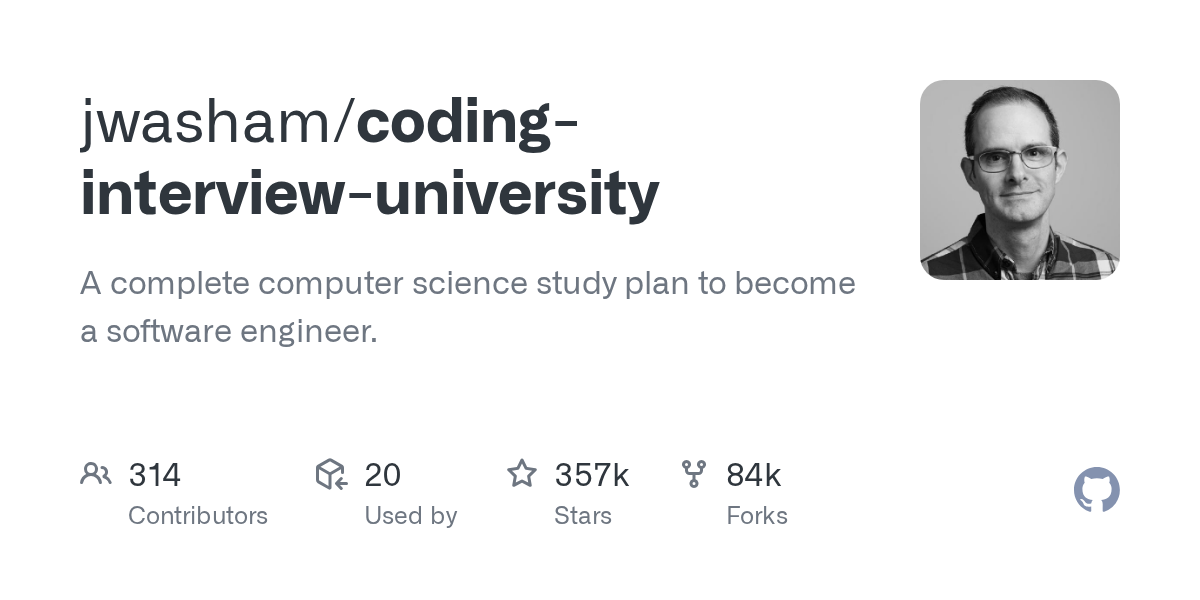
The "Coding Interview University" repository is a highly popular GitHub resource offering a complete computer science study plan designed to help aspiring software engineers. It covers essential topics from data structures and algorithms to system design, preparing users for technical interviews at top tech companies. This extensive guide, created by a former Amazon SDE, provides a structured path to mastering the fundamentals required for a successful career in software engineering.
ACM-ICPC-Algorithms: A Comprehensive Collection for Competitive Programming
July 16, 2026
ACM-ICPC-Algorithms is a highly starred GitHub repository offering a vast collection of algorithms and data structures essential for competitive programming. It provides solutions in multiple languages, including C++, Java, and Python, making it an invaluable resource for participants of the ACM-ICPC and similar contests. With over 2200 stars and 1200 forks, this repository is a proven asset for mastering algorithmic challenges.
Awesome Competitive Programming: Curated Resources for Algorithms & Data Structures
July 16, 2026
Awesome Competitive Programming is a comprehensive GitHub repository offering a curated list of resources for competitive programming, algorithms, and data structures. It serves as an invaluable guide for anyone looking to excel in coding contests, providing links to tutorials, practice sites, books, and community insights. This extensive collection, built over 11 years, aims to connect aspiring programmers with essential learning materials.

ML-From-Scratch: Machine Learning Models and Algorithms in NumPy
March 9, 2026
ML-From-Scratch is a comprehensive GitHub repository offering bare-bones NumPy implementations of fundamental machine learning models and algorithms. It emphasizes accessibility, making complex concepts easier to understand for learners and practitioners. This project covers a wide range of topics, from linear regression to deep learning and reinforcement learning, all implemented from scratch.
Source repository
Open the original repository on GitHub.
23 counted GitHub visits