Claude Fable 5.2 and Mythos 5.2 Target Hard Technical Work
Anthropic says its upgraded models improve coding, reasoning and vision, with Fable available broadly and Mythos access limited to qualifying cybersecurity and biomedical research organizations.
#artificial-intelligence#llm#ai-agents#software-development#coding
Models aimed at the hardest tasks
Anthropic has introduced Claude Fable 5.2 and Claude Mythos 5.2, updates to models it positions for demanding, open-ended technical work. The company reports improvements in coding, reasoning and vision, and says testers found the models communicated more clearly than earlier versions.
Fable and Mythos are the same underlying model, but their availability differs. Anthropic says Fable has cybersecurity and biology safeguards intended to reduce misuse, allowing it to be offered to all users. Organizations working on beneficial cybersecurity or biomedical research can apply for Mythos through Anthropic’s Life Sciences and Cyber Verification Programs.
Anthropic’s examples from prerelease testing span software, hardware and research. It says the models helped engineers complete software migrations, designed three working electronic devices from scratch, advanced robotics evaluations and formalized a proof of Fermat’s Last Theorem in 30 hours. Those are company-reported examples, not a guarantee that a model will deliver comparable results on another team’s project.
Coding and long-running agent work
Anthropic reports that more than 90% of changes merged into its core codebase are written by Claude with human guidance. In one example involving an earlier version of Fable 5.2, a team of agents migrated a production service from Python to Rust. Anthropic says the resulting service was more efficient and reliable, and started about 26 times faster.
A separate experiment gave Fable 5.2 the task of prototyping an operating system. According to Anthropic, it coordinated more than 1,000 subagents over eight days and produced a system that boots on a laptop, with device drivers, storage, windows, a login screen and an installer. The scale of that demonstration makes orchestration and review important considerations: a large amount of generated work still needs to be tested and assessed.
On FrontierCode 2.0, which evaluates whether code changes would be merged by open-source repository maintainers, Anthropic reports a score of 49.1% for Fable 5.2 at Xhigh effort. At High effort, it scored 45.3%, close to Opus 5.5’s 45.5%; Anthropic says that result came at roughly half the cost per task. These are benchmark results under specific evaluation settings, rather than predictions of success on every codebase.
The release also emphasizes efficiency. Anthropic says Fable 5.2 and Mythos 5.2 generate output up to 30% faster than version 5.1 and cost $8 per million input tokens and $40 per million output tokens. An optional fast mode, which the company says can increase token generation speed by up to 2.5 times, costs $16 per million input tokens and $80 per million output tokens.
Broader capabilities, with limits
Anthropic’s reported evaluation results cover more than code. Fable 5.2 scored 73.4% on Chartography, a chart-reading test, and 74.2% on Humanity’s Last Exam with tools. On RoboDojo Sim, the company reports a 64.9% result, compared with 27.6% for Fable 5.1. Different tests use different tools and effort settings, so the scores are best read alongside their evaluation details rather than as a single ranking of general capability.
For most coding and knowledge work, Anthropic recommends starting with Claude Opus 5.5 and moving to Fable or Mythos when the task’s scope or complexity calls for it. It also describes Fable as a possible advisor for smaller models or an orchestrator that delegates simpler tasks. That framing suggests a selective role for the new models, rather than making them the default choice for every request.
Anthropic says it ran extensive prerelease safety testing, including new evaluations for behaviors such as sandbox escapes. The company assesses high-stakes misalignment risks as low and says the model performed as well as or better than recent models on most alignment measures. It also says Fable’s cyber and biology safeguards are as robust as version 5.1’s, with fewer unnecessary blocks, and that it added its strongest protections yet against distillation attacks. These are Anthropic’s assessments; teams evaluating high-impact uses should review the system card and test safeguards in their own setting.
Open-source tools around agent work
The model launch is relevant to developers building agent workflows, though the following repositories are tools and guidance, not versions of Fable or Mythos. SWE-agent gives language models tools to investigate and attempt fixes for GitHub issues. OSRepos lists it as Maintained, with 20.8k stars, and notes that its maintainers recommend mini-SWE-agent for new use.
For teams that want reusable engineering practices rather than a complete agent framework, Matt Pocock’s skills collection provides guidance on requirements clarification, testing, debugging and code design. OSRepos lists it as Active, with 319k stars. Omnigent takes a different approach, coordinating coding agents across harnesses; it is listed as New, with 11.3k stars. Such projects can help teams structure agent work, but their relevance depends on the tools and model endpoints a team chooses to use.
What to watch
The key questions are whether the reported gains hold on real projects, how much effort and cost complex tasks require, and whether safeguards remain effective in practice. For developers, Fable 5.2 looks most relevant when a task is unusually ambitious; Anthropic’s own guidance points to Opus 5.5 as the starting point for more routine coding and knowledge work.
Sources
Projects in this post
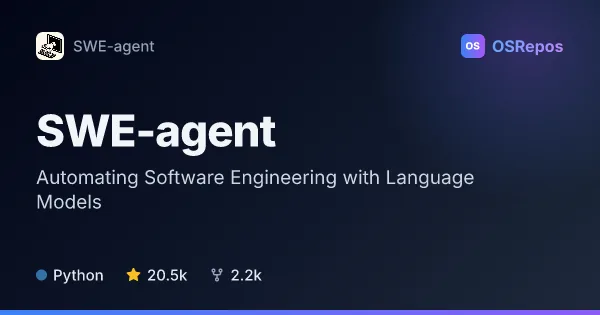
SWE-agent: Use Language Models to Fix GitHub Issues
SWE-agent gives a language model tools to work on real software repositories, including diagnosing and attempting to fix GitHub issues. It is designed for software engineering research and configurable coding tasks, though its maintainers now recommend mini-SWE-agent for new use.
MaintainedHealth 53/100
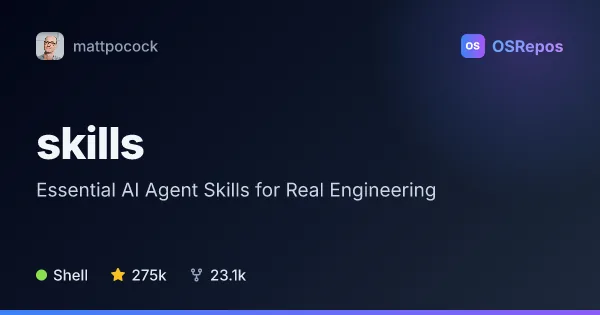
skills: Apply Engineering Workflows to Coding Agents
A collection of composable agent skills that brings engineering practices such as requirements clarification, TDD, debugging, and code design into coding-agent workflows. It suits developers who want to guide agents without adopting an end-to-end process framework.
ActiveHealth 63/100
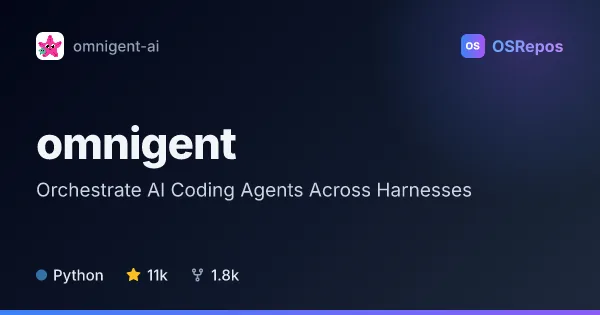
omnigent: Orchestrate AI Coding Agents Across Harnesses
Omnigent is a Python meta-harness for coordinating Claude Code, Codex, Cursor, and other coding agents through one shared layer. Run and govern agents from a terminal, browser, phone, or desktop app, and switch harnesses without rewriting agent configurations.
NewHealth 82/100
Found this useful?
Share it with someone who follows open source.
Written with the help of AI from the sources listed above and OSRepos data, and reviewed before publishing. How we measure projects.