Open Source AI Agents
AI agents are software systems that use language models and other tools to pursue goals through multiple steps. They can interpret requests, plan actions, call APIs, search or modify data, and adjust their approach based on results. Agent systems help automate work that involves decisions and changing context, while enabling people to delegate repeatable tasks or coordinate specialized capabilities.
Open source tools in this area include agent frameworks, orchestration libraries, workflow templates, skills, interfaces, and memory or tool-integration components. When choosing one, consider its maturity, license, maintenance activity, model and infrastructure requirements, security controls, and compatibility with your existing systems. These tools are useful to developers building agent-powered applications, teams automating workflows, and researchers exploring how agents behave and collaborate.
322 repositories · updated October 3, 2026
agent-observability: Self-Hosted Observability for AI Coding Agents
agent-observability offers a robust, self-hosted OpenTelemetry stack designed for AI coding agents like Claude Code and OpenAI Codex. It ensures all telemetry data, including model requests, tool executions, and session activity, remains local within your environment. This comprehensive solution provides ready-made Grafana dashboards for deep insights into agent performance and usage.
OrcaReplay: Time Travel for AI Agents, Debugging and Evaluation
OrcaReplay introduces "time travel" capabilities for AI agents, allowing developers to record, replay, fork, and debug any agent run with any model. It addresses the challenges of AI agent debugging by providing byte-for-byte reproducibility, offline analysis, and the ability to compare different models from specific checkpoints. This tool, built by the OrcaRouter.ai team, enhances observability and control over complex agent behaviors.
Prime Agent: A Self-Improving RLM Agent for Coding and Autonomous Tasks
Prime Agent is an open-source, self-improving Recursive Language Model (RLM) agent designed for coding workflows and long-running autonomous tasks. It integrates a persistent Python control environment with a durable harness state, allowing useful context and reusable patterns to persist across sessions. Built in Rust, this project aims to enhance developer productivity through programmatic control and autonomous capabilities.
OpenMake LLM: Self-Hosted AI Workspace for Local and Open-Weight LLMs
OpenMake LLM is an open-source, self-hosted AI workspace for local and open-weight LLMs. It coordinates specialized models, autonomous agents, and tools for deep research and artifact generation. This platform supports vLLM, LiteLLM, and BYOK providers, offering a robust environment for managing AI workloads.
Uni-Agent: A Scalable Framework for Training Long-Horizon AI Agents
Uni-Agent is a powerful Python framework designed for training long-horizon agents at scale. It allows users to integrate existing agent harnesses, unify diverse agent tasks through an extensible interface, and run thousands of sessions concurrently for efficient data collection and training.
OpenCompany: Run a Hive Mind of AI Agents for Your Business
OpenCompany is a Rust-powered platform that enables a single operator to run an entire business using a "hive mind" of AI agents. It orchestrates specialized agents to handle various company functions, allowing the human operator to focus on vision and critical decisions. This innovative approach moves beyond traditional multi-agent systems, fostering concurrent deliberation and task completion.
Vicoa: Agentic IDE for Orchestrating Coding Agents Across Devices
Vicoa is an open-source, self-hostable agentic IDE designed to orchestrate a team of coding agents. It enables developers to run and steer multiple AI agents from various devices, including desktop, mobile, and remote servers, providing a unified command center for development workflows.
CCCC: Coordinate Your Coding Agents Like a Group Chat
CCCC is a production-minded orchestrator designed to coordinate coding agents like a group chat, offering features such as read receipts, delivery tracking, and remote operations from your phone. It enables 24/7 workflow for multi-agent teams with a single `pip install` and zero infrastructure. This tool helps manage diverse AI runtimes, ensuring persistent collaboration across different machines and trusted working groups.
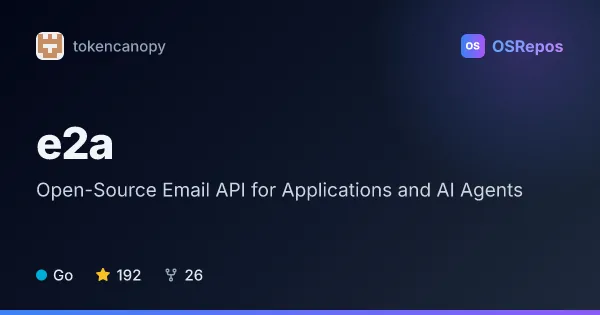
e2a: Open-Source Email API for Applications and AI Agents
e2a is an open-source email API designed for applications and AI agents, offering robust transactional email capabilities and real two-way inboxes. It supports both managed hosting and self-hosting with Docker, providing features like human-in-the-loop approval and advanced content screening. Built in Go, e2a aims to bridge email's universal addressability with the structured data world of AI agents.
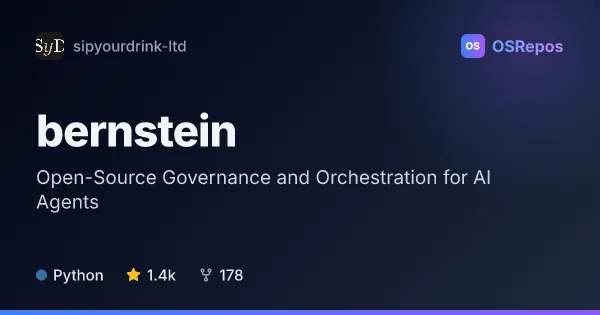
Bernstein: Open-Source Governance and Orchestration for AI Agents
Bernstein is an open-source framework designed for the governance and orchestration of AI agents, allowing users to define rules declaratively. It enforces these policies and generates verifiable, replayable records of all agent activities. This Python-based solution provides a robust layer for managing complex AI agent workflows with transparency and accountability.
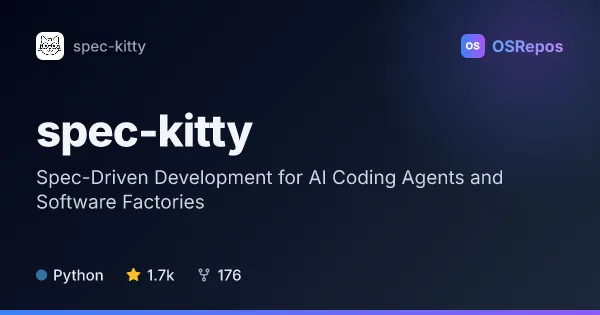
Spec Kitty: Spec-Driven Development for AI Coding Agents and Software Factories
Spec Kitty is an open-source CLI that enables spec-driven development for AI coding agents and multi-agent workflows. It transforms product intent into a structured, repo-native AI coding workflow, providing isolated git worktrees and a clear lifecycle for development tasks. This tool helps teams build governed software factories, ensuring visibility and traceability in AI-assisted software development.
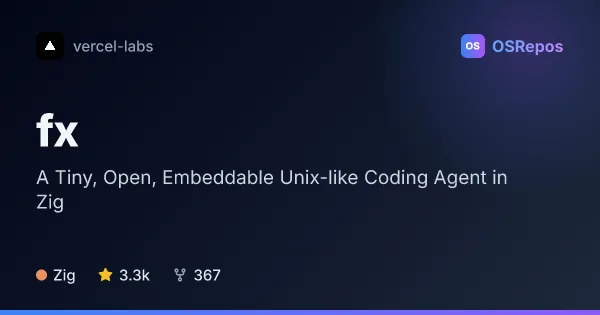
fx: A Tiny, Open, Embeddable Unix-like Coding Agent in Zig
fx is an experimental, open-source coding agent CLI written in Zig, designed to be small, native, and embeddable. It offers a Unix shell-like interface for interacting with various AI models, providing a flexible tool for developers. This agent supports multiple AI gateways and custom model connections, making it highly adaptable to different workflows.