Operit vs UFO
AI agents for Android and desktop workflows compared
Operit connects AI models to Android tools, files, terminals, and workspaces for phone-based automation and development. UFO focuses on Windows desktop automation and can coordinate agents across devices through Galaxy, so the main difference is Android-centered use versus desktop and multi-device workflows.
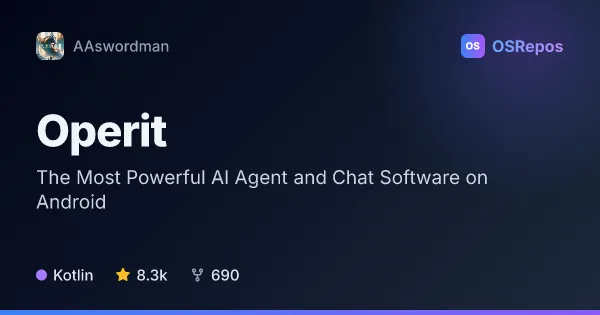
Operit: Run AI Agents and Chat on Android
Operit is an Android AI agent platform that connects cloud or local models to device tools, terminals, browsers, and project workspaces. It suits Android users who want AI-assisted automation, development, and chat in one app.
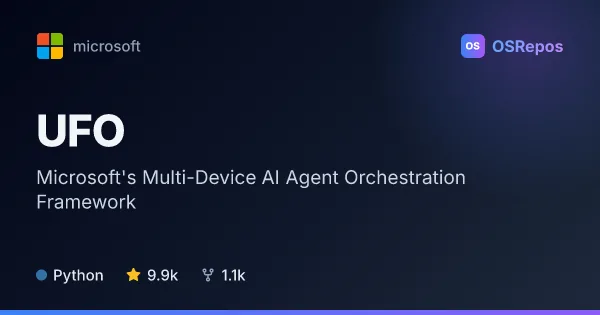
UFO: Automate Desktop Tasks Across Devices with AI Agents
UFO combines a Windows desktop agent with a framework for coordinating agents across devices and platforms. Use it for Windows automation or multi-step workflows that need task planning, device assignment, and parallel execution.
| Operit | UFO | |
|---|---|---|
| Language | Kotlin | Python |
| License | LGPL-3.0 | MIT |
| Stars | 8.3k | 9.9k |
| Forks | 690 | 1.1k |
| Last analyzed | Oct 3, 2026 | Oct 3, 2026 |
Key differences
- Operit is an Android app for device automation, chat, and development, while UFO² targets Windows desktop tasks and Galaxy coordinates agents across devices.
- Operit is written in Kotlin; UFO is written in Python.
- Operit uses the LGPL-3.0 license, while UFO uses the MIT license.
- Operit connects cloud or supported local models; UFO requires configuring an LLM provider.
- Operit offers Android automation through Accessibility, Shizuku, or Root, subject to permissions and device support. UFO uses GUI and API actions for Windows automation, with Galaxy supporting device agents across Windows, Linux, and Android.
- Operit is not archived and points to Operit 2 as a separate cross-platform successor. UFO presents UFO² as its stable option and Galaxy as under active development.
Choose Operit if you…
- want AI-assisted automation, chat, or development on an Android device.
- need an agent to work with Android tools, files, terminals, or project workspaces.
- prefer connecting cloud models or trying supported local inference on a phone.
Choose UFO if you…
- want to automate tasks in Windows desktop applications.
- need to coordinate multi-step work across device agents, with task dependencies or parallel execution.
- are building device-specific agents or workflows with MCP integrations.
Compare the numbers side by side, or add more projects
This comparison is generated with AI from the OSRepos analyses of both projects. Always check each project's repository and documentation before choosing.