ECC vs agentic-engineering
Coding-agent workflow toolkits compared
ECC and agentic-engineering both give coding agents reusable workflows for more consistent development. ECC offers a broad toolbox of skills, agents, hooks, memory, and security scanning, while agentic-engineering centers on persistent project documents, verification, and human-controlled merges.
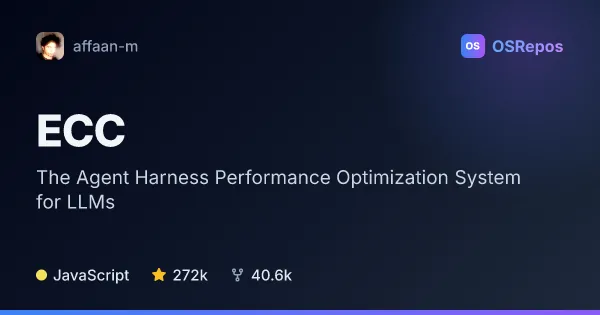
ECC: Equip Coding Agents with Reusable Engineering Workflows
ECC is a toolkit for adding structured engineering workflows to AI coding agents. It combines reusable skills, specialized agents, hooks, memory, and security scanning, with support across Claude Code and several other harnesses.
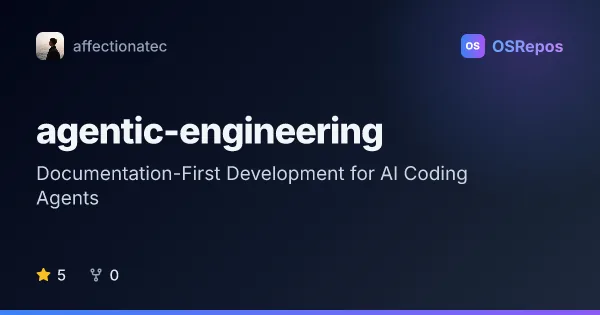
agentic-engineering: Give Coding Agents a Persistent Project Workflow
A documentation-first skill suite for coding agents, covering project specs, decisions, session memory, verification, and Git workflow. It suits teams running multi-session development who want agents to follow explicit contracts and leave merges to humans.
| ECC | agentic-engineering | |
|---|---|---|
| Language | JavaScript | — |
| License | MIT | MIT |
| Stars | 272k | 5 |
| Forks | 40.6k | 0 |
| Last analyzed | Oct 3, 2026 | Oct 4, 2026 |
Key differences
- ECC provides specialized agents, optional hooks and memory, selectable coding rules, and AgentShield scanning; agentic-engineering focuses on repository documentation, task checkpoints, verification, and Git workflow.
- ECC supports Claude Code and several other harnesses through adapters with varying feature coverage; agentic-engineering describes Claude Code plugin installation and manual use with Codex and other tools.
- ECC is a JavaScript toolkit, and its universal package requires Node.js 18 or newer; agentic-engineering is a documentation-first suite of markdown skills and workflow conventions, not a programming-language library.
- ECC covers reusable workflows such as planning, implementation, testing, review, and security checks; agentic-engineering adds project-specification and brownfield-onboarding workflows, plus a loop driver for planned tasks.
- Both projects use the MIT license. ECC lists 272k stars and 40.6k forks, while agentic-engineering lists 5 stars and 0 forks.
- ECC is suited to developers and teams seeking a configurable toolbox across coding-agent tasks; agentic-engineering is suited to teams prioritizing persistent records, auditability, and human review over minimizing process.
Choose ECC if you…
- need reusable skills and specialized agents for a range of development tasks.
- want optional hooks, memory, coding rules, or agent-configuration security scanning.
- use Claude Code or want to reuse workflows across multiple harnesses, while checking differences in support.
Choose agentic-engineering if you…
- want project requirements, decisions, plans, and session status recorded in repository documents.
- need independent verification, task checkpoints, and human-controlled merges in a multi-session workflow.
- are onboarding an undocumented codebase or want a loop driver to advance planned tasks through verification.
Compare the numbers side by side, or add more projects
This comparison is generated with AI from the OSRepos analyses of both projects. Always check each project's repository and documentation before choosing.