AgentTeams vs clowder-ai
AI agent coordination platforms compared
AgentTeams and clowder-ai coordinate existing AI agents rather than supplying their core agent logic. AgentTeams centers collaboration in shared Matrix rooms with human oversight and self-hosted deployment, while clowder-ai focuses on persistent roles, shared memory, messaging, and review across agent CLIs.
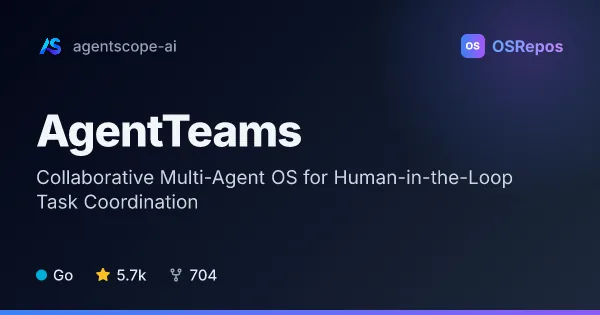
AgentTeams: Coordinate Human-Supervised AI Agent Teams
AgentTeams runs multiple AI agents as coordinated workers in shared Matrix rooms, with a manager to assign work and people able to observe and intervene. It is aimed at teams that want self-hosted, auditable agent collaboration across different runtimes.
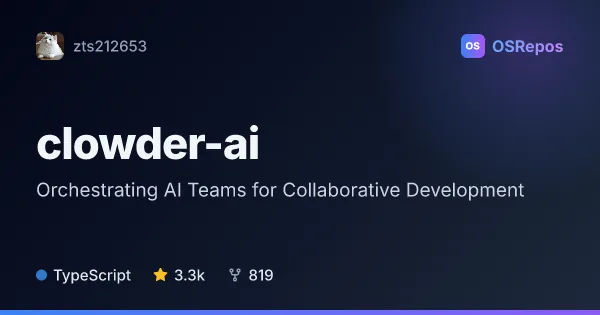
clowder-ai: Coordinate AI Agents as a Collaborative Team
Clowder AI adds a platform layer for coordinating agent CLIs from multiple model families. It is for developers who want agents to retain roles and shared memory, communicate with one another, and review each other’s work.
| AgentTeams | clowder-ai | |
|---|---|---|
| Language | Go | TypeScript |
| License | Apache-2.0 | MIT |
| Stars | 5.7k | 3.3k |
| Forks | 705 | 819 |
| Last analyzed | Oct 3, 2026 | Oct 3, 2026 |
Key differences
- AgentTeams uses a Manager-Worker structure and shared Matrix rooms where people can observe and intervene; clowder-ai emphasizes agent-to-agent messaging, role continuity, and cross-model review.
- AgentTeams supports runtimes including OpenClaw, QwenPaw, Hermes, and experimental DeepSeek Harness; clowder-ai routes work among Claude Code, Codex CLI, Gemini CLI, and opencode.
- AgentTeams offers Docker and Kubernetes deployment, with a Kubernetes controller and Helm option; clowder-ai requires supported agent CLIs and, when run from source, Node.js 20+ and pnpm 9+.
- AgentTeams is written in Go and uses the Apache-2.0 license; clowder-ai is written in TypeScript and uses the MIT license.
- AgentTeams lists 5.7k stars and 705 forks; clowder-ai lists 3.3k stars and 819 forks.
Choose AgentTeams if you…
- need humans to observe and intervene in agent conversations through Matrix rooms.
- want to coordinate multiple runtimes with Docker or Kubernetes deployment options.
- need centralized model-traffic routing and credential management for Workers.
Choose clowder-ai if you…
- already use supported agent CLIs and want them to collaborate on software work.
- want agent roles and shared memory to persist across sessions.
- need asynchronous handoffs, cross-model review, or plugins for MCP tools and messaging adapters.
Compare the numbers side by side, or add more projects
This comparison is generated with AI from the OSRepos analyses of both projects. Always check each project's repository and documentation before choosing.