shortest vs selenium
Browser testing frameworks compared
shortest and selenium both support browser-driven testing of web applications. shortest turns natural-language instructions into tests using Claude and Playwright, while selenium provides WebDriver-based browser automation through bindings for multiple languages.
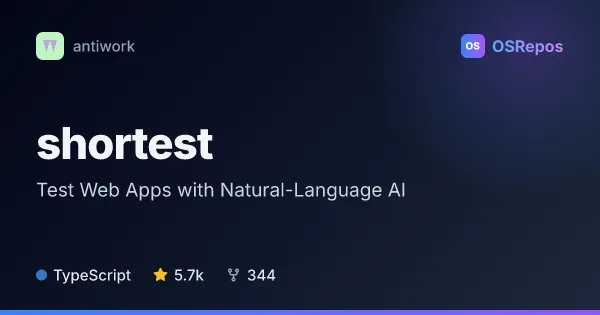
shortest: Test Web Apps with Natural-Language AI
Shortest is a TypeScript end-to-end testing framework that turns natural-language instructions into browser tests using Anthropic Claude and Playwright. It suits teams that want to describe user flows in plain language, with custom code available for additional assertions.
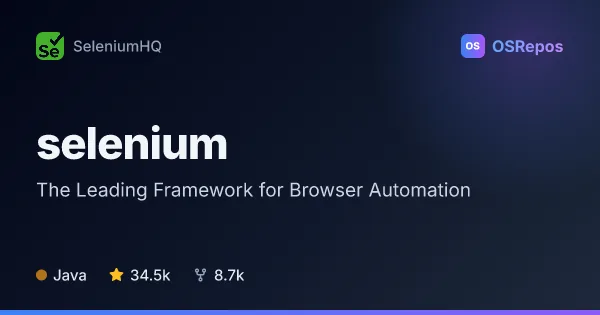
selenium: Automate Web Browsers Across Languages
Selenium is a browser automation framework built around the W3C WebDriver standard. It helps developers and testers automate browser interactions across major browsers using bindings for several programming languages.
| shortest | selenium | |
|---|---|---|
| Language | TypeScript | Java |
| License | MIT | Apache-2.0 |
| Stars | 5.7k | 34.5k |
| Forks | 344 | 8.7k |
| Last analyzed | Oct 12, 2026 | Oct 3, 2026 |
Key differences
- shortest is a TypeScript framework focused on natural-language browser and API tests; selenium is a broader WebDriver ecosystem for browser automation.
- shortest uses Anthropic Claude with Playwright, while selenium implements the W3C WebDriver standard and supports major browsers.
- shortest tests can combine natural-language steps with TypeScript callbacks and lifecycle hooks; selenium provides APIs through language bindings.
- shortest is licensed under MIT; selenium is licensed under Apache-2.0.
- shortest requires an Anthropic API key for test execution; selenium tests require access to suitable browsers and their execution environment.
- shortest lists 5.7k stars and 344 forks; selenium lists 34.5k stars and 8.7k forks.
Choose shortest if you…
- want to write browser-test steps in natural language with Claude and Playwright.
- need TypeScript callbacks and lifecycle hooks alongside browser or API test steps.
- are comfortable relying on an external Anthropic API for test execution.
Choose selenium if you…
- need browser automation through the W3C WebDriver standard.
- want language bindings for Java, JavaScript, Python, Ruby, .NET, or Rust.
- need Selenium Grid for distributed browser execution.
Compare the numbers side by side, or add more projects
This comparison is generated with AI from the OSRepos analyses of both projects. Always check each project's repository and documentation before choosing.