sshx vs zellij
Collaborative terminal sharing and workspace tools compared
sshx shares a live terminal with others through a web link, while zellij organizes terminal applications into a persistent workspace of panes and tabs. sshx focuses on sharing an interactive session; zellij focuses on managing terminal work, with multiplayer and a built-in web client among its capabilities.
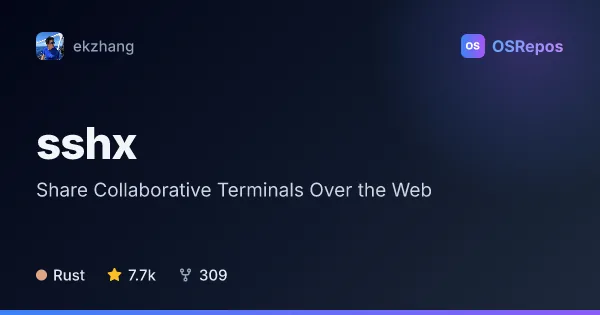
sshx: Share Collaborative Terminals Over the Web
sshx lets people share a live terminal through a web browser, with shared cursors and an infinite canvas for multiple terminal windows. It suits pair debugging and temporary access to a running development or CI session.
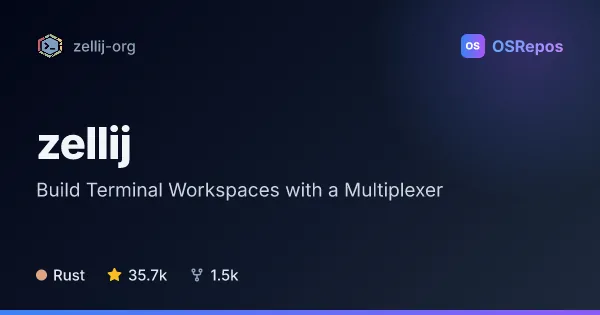
zellij: Build Terminal Workspaces with a Multiplexer
Zellij is a Rust terminal workspace and multiplexer for developers and operations teams. It combines panes, layouts, collaboration, and WebAssembly plugins, with an optional built-in web client.
| sshx | zellij | |
|---|---|---|
| Language | Rust | Rust |
| License | MIT | MIT |
| Stars | 7.7k | 35.7k |
| Forks | 309 | 1.5k |
| Last analyzed | Oct 8, 2026 | Oct 15, 2026 |
Key differences
- sshx is for sharing one live terminal session; zellij organizes shells and applications across panes and tabs.
- sshx uses a hosted service with a distributed server mesh and does not currently support self-hosted deployment; zellij is described as a terminal multiplexer with a built-in web client.
- sshx emphasizes end-to-end encryption, real-time cursors, and automatic reconnection; zellij emphasizes layouts, workspace customization, and WebAssembly plugins.
- Both projects are written in Rust and use the MIT license.
- The supplied project facts list 7.7k stars and 306 forks for sshx, and 35.6k stars and 1.5k forks for zellij.
Choose sshx if you…
- need to share a live terminal through a web link for pairing, support, or troubleshooting.
- want end-to-end encryption and real-time collaboration features such as shared cursors.
- need to expose a temporary terminal from a CI job to trusted viewers.
Choose zellij if you…
- want to organize shell sessions and applications in panes, tabs, and reusable layouts.
- need a customizable terminal workspace for development or operations tasks.
- want multiplayer sessions, WebAssembly plugins, or a built-in web client.
Compare the numbers side by side, or add more projects
This comparison is generated with AI from the OSRepos analyses of both projects. Always check each project's repository and documentation before choosing.