infinity vs LightLLM
Self-hosted model serving compared
infinity serves embedding, reranking, and selected multimodal models through an OpenAI-aligned API. LightLLM focuses on large language model inference and serving, with additional work on scheduling and structured generation.
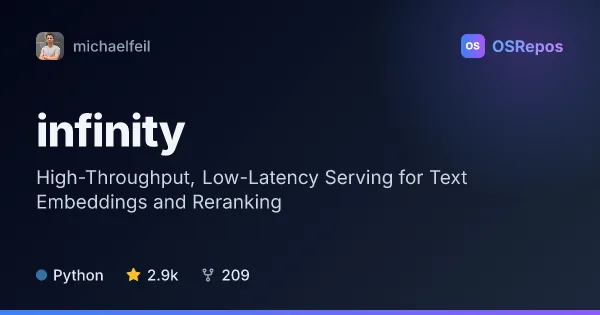
infinity: Serve Embedding and Reranking Models via API
Infinity is a Python serving engine for text embeddings, reranking, and selected image, audio, and late-interaction models. It provides an OpenAI-aligned REST API with multiple inference backends for teams deploying models from Hugging Face.
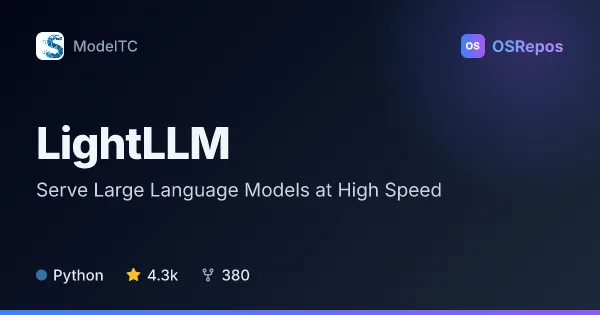
LightLLM: Serve Large Language Models at High Speed
LightLLM is a lightweight, scalable Python framework for LLM inference and serving, drawing on projects including NVIDIA FasterTransformer, Hugging Face TGI, vLLM, and FlashAttention. It suits teams deploying models or researching serving systems.
| infinity | LightLLM | |
|---|---|---|
| Language | Python | Python |
| License | MIT | Apache-2.0 |
| Stars | 2.9k | 4.3k |
| Forks | 209 | 380 |
| Last analyzed | Oct 3, 2026 | Oct 29, 2026 |
Key differences
- infinity targets embeddings, reranking, and selected image, audio, and late-interaction tasks; LightLLM targets large language model inference and serving.
- infinity offers a REST API and asynchronous Python API, plus several inference backends; LightLLM is a Python serving framework built on techniques and components from other serving projects.
- infinity is licensed under MIT; LightLLM is licensed under Apache-2.0.
- infinity provides Docker images and configuration options for serving multiple models; LightLLM's deployment guides cover model-specific setup.
- infinity is suited to search, recommendation, and RAG teams needing embedding or reranking endpoints; LightLLM also suits researchers exploring request scheduling and structured generation.
- LightLLM has more reported stars and forks than infinity: 4.3k stars and 380 forks versus 2.9k stars and 209 forks.
Choose infinity if you…
- need self-hosted embedding or reranking endpoints for search or RAG.
- want an OpenAI-aligned REST API or an asynchronous Python API for inference.
- need selected image-text, audio-text, or late-interaction model support.
Choose LightLLM if you…
- need a Python framework focused on LLM inference and serving.
- want to explore request scheduling, token-level cache management, or structured generation.
- are evaluating deployment guides for models such as DeepSeek.
Compare the numbers side by side, or add more projects
This comparison is generated with AI from the OSRepos analyses of both projects. Always check each project's repository and documentation before choosing.