Open Source AI Weekly: Five Developments to Watch, October 9–15
This week’s developments connect model routing, multimodal decisions, smaller workflow agents, latency-aware orchestration and safer automation. Here is what developers should know, including a production caveat for n8n 2.44.
#ai-agents#llm#model-routing#multimodal-ai#workflow-automation
A more connected AI stack
Five developments published between October 9 and 15 point toward a practical shift: teams can increasingly combine model routing, structured decisions, agents and workflow automation instead of integrating each piece separately. The week also brought research on whether smaller models can execute known procedures, and on how to make multi-agent workflows faster.
That does not mean every component is ready for production. Several claims come from vendor benchmarks, and n8n’s 2.44 release was still pre-release on October 15. The useful question is how these pieces fit together, and what needs independent testing.
LiteLLM brings decisions and agents behind one gateway
LiteLLM 1.105, released October 11, adds a Decisions API with /v1/decisions and /v1/systemone. The endpoints support typed choice, classification and scoring tasks across backends including Jev, Clef, Microsoft-Decision-1 and self-hosted models served through vLLM.
The release also introduces litellm.agent() for running coding agents such as Claude Code, Codex and OpenCode through the gateway. Its Lens observability feature uses OpenTelemetry, stores traces in ClickHouse and associates costs with runs. Lens is in beta.
The potential benefit is a shared interface for decisions, general LLM calls and agents, with traces to help investigate failures. Teams considering an upgrade should review LiteLLM’s documented breaking changes, including changes to PostgreSQL migrations and Decisions API parameter handling.
For the agent side, OpenCode is an open source coding agent with a terminal UI and desktop apps in beta. OSRepos lists it as Active, with 214k stars and 1.9k recent stars gained. LiteLLM’s mention of OpenCode as an agent it can run makes the project a relevant example of the tooling this gateway aims to connect.
Clef-omni adds multimodal decisions
Cloudflare announced Clef-omni on October 9 as an open-weight multimodal decision model. It can process text and documents, images, audio in MP3 and WAV formats, and video in MP4 and WebM. Based on a mixture-of-experts architecture using Qwen3-Omni-30B-A3B-Instruct, it returns structured decisions rather than requiring a conventional generated text answer.
Cloudflare reports a median latency of about 130 milliseconds for text decisions and says Clef-omni analyzed a 21-second video with audio in about 1.5 seconds. These are vendor-published benchmarks, not independent results. Cloudflare also announced a Clef-flash input price of $0.038 per million tokens, and a hosted context limit of 24,000 tokens for that model.
Open weights make local evaluation possible, but the announcement says Clef-omni requires substantially more capable hardware than a small classifier. That distinction matters: access to weights does not by itself make a model inexpensive or easy to host.
A 9B model performs well on known workflows
A paper published October 9 evaluated 17 models, from 1.7B to 14B parameters, on customer-support workflows represented as skills and simulated MCP tool scenarios. GPT-5.4 had the strongest overall results. Among open-weight models below 20B parameters, Qwen3.5-9B performed best in the evaluated criteria and outperformed several commercial models.
The result supports testing smaller models for bounded procedures where the task and available tools are known. It does not establish that a 9B model is a general-purpose agent substitute. Evaluation also needs care: the paper reports average agreement of Kappa = 0.524 among five LLM evaluators judging success and failure. Checking tool calls and final state, rather than relying only on written answers, is a sensible way to validate a workflow.
The Qwen3 repository provides guidance for selecting, running and deploying open-weight models. OSRepos lists it as Quiet, with 27.7k stars. The paper’s Qwen3.5-9B result is a specific model finding; it should not be read as a benchmark of every model in the Qwen3 repository.
Latency is a workflow property
The LAWA paper, published October 10, focuses on the total execution time of multi-agent workflows, or makespan. Its approach identifies critical paths in a workflow graph and edits the structure to reduce elapsed time while preserving task quality. The authors evaluated it on seven benchmarks, but the abstract does not give one improvement percentage that applies across scenarios.
The practical lesson is to measure dependencies before optimizing. Independent lookups may be run in parallel rather than one after another, but indiscriminate parallelism is not the whole method: LAWA aims to change workflow structure around its critical path.
That concern also applies to visual automation. n8n connects services in workflows and supports AI agents; OSRepos lists it as Active, with 208k stars and 769 recent stars gained. Its large community makes it a natural project to watch as teams apply these ideas to automation, but the research is not itself a feature of n8n.
n8n 2.44: useful fixes, but check the release channel
n8n’s 2.44 changes address access policies for agent tools and credentials, cross-project permissions, job recovery during worker shutdown or pause, and handling of waiting executions when a resume request fails. Other changes cover atomic persistence of agent draft settings and recovery of tool calls loaded through skills.
There is an important version caveat: on October 15, n8n 2.43.6 was identified as stable, while 2.44.2 remained pre-release. Production teams should not move to 2.44 just to obtain these fixes without checking the release status and testing their own workflows.
What to watch
The strongest theme is a more modular agent stack: a gateway can route decisions and model calls, smaller models may handle defined procedures, and workflow structure can be tuned for latency. Before adopting any of it, compare backends on the same tasks, test permissions and recovery paths, and measure both outcome quality and execution time. Treat vendor benchmarks as a starting point, not a substitute for evaluation on your workloads.
Projects in this post
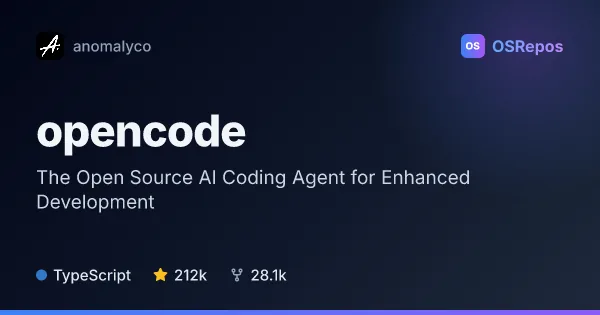
opencode: Work with an Open Source AI Coding Agent
OpenCode is an open source AI coding agent for developers who want AI assistance in their coding workflow. It offers build and read-only plan agents, a terminal UI, and desktop apps in beta.
ActiveHealth 86/100
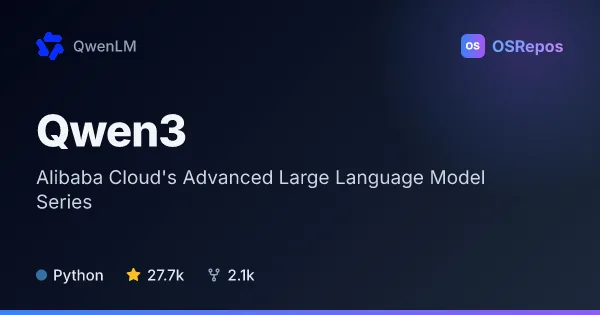
Qwen3: Build and Run Open-Weight Language Models
Qwen3 is a family of open-weight language models for reasoning, chat, coding, and tool use. This repository guides developers through model selection, local inference, deployment, and fine-tuning with supported frameworks.
QuietHealth 41/100
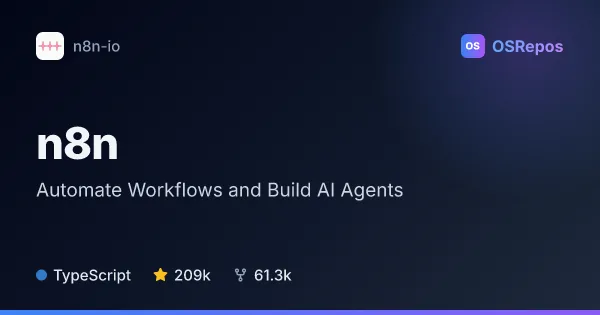
n8n: Automate Workflows and Build AI Agents
n8n is a fair-code workflow automation platform built on Node.js for connecting services and building AI agents. Combine visual workflows with custom code, and run them on your own infrastructure or in n8n Cloud.
ActiveHealth 84/100
Found this useful?
Share it with someone who follows open source.
Written with the help of AI from the sources listed above and OSRepos data, and reviewed before publishing. How we measure projects.