loop-engineering vs loopy
AI-agent workflow tools compared
loop-engineering provides patterns, starter configurations, and CLI tools for operating coding-agent workflows around a repository. loopy is an installable skill for finding, adapting, creating, and running bounded workflows; its companion Loop Library catalog is separate.
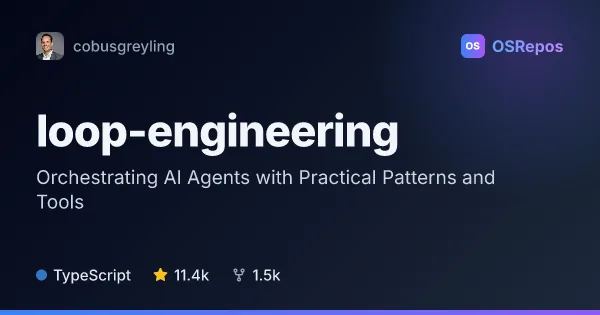
loop-engineering: Design and Operate AI Coding-Agent Loops
A TypeScript toolkit and pattern library for designing repeatable workflows around AI coding agents. It helps teams discover work, delegate tasks, verify results, and preserve state instead of managing every step through prompts.
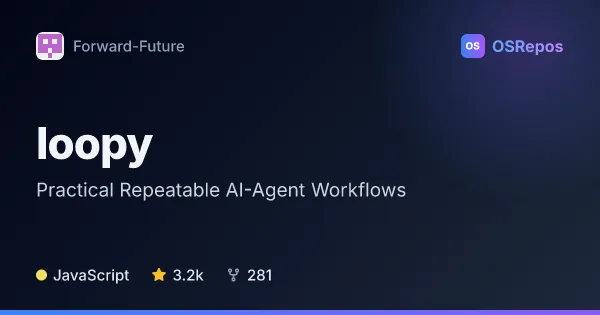
loopy: Find and Run Repeatable AI-Agent Workflows
Loopy is an installable skill for discovering, adapting, creating, and running bounded AI-agent workflows called loops. It works with the separate Loop Library catalog and suits people who want repeatable tasks with explicit checks and stopping points.
| loop-engineering | loopy | |
|---|---|---|
| Language | TypeScript | JavaScript |
| License | MIT | MIT |
| Stars | 11.4k | 3.2k |
| Forks | 1.5k | 281 |
| Last analyzed | Oct 3, 2026 | Oct 3, 2026 |
Key differences
- loop-engineering focuses on repository operations such as issue triage, dependency updates, CI maintenance, and PR monitoring; loopy focuses on discovering and running bounded workflows with checks and stopping conditions.
- loop-engineering offers CLI commands, GitHub Actions starters, and a staged rollout from reporting to unattended operation; loopy works as an optional skill within an AI coding agent and returns a receipt after bounded runs.
- loop-engineering is written in TypeScript, while loopy is written in JavaScript.
- Both projects use the MIT license.
- loop-engineering has 11.4k stars and 1.5k forks; loopy has 3.2k stars and 281 forks.
Choose loop-engineering if you…
- need CLI tools and GitHub Actions starters for recurring repository maintenance.
- want to introduce agent autonomy gradually, starting with report-only workflows.
- need patterns for triage, CI, dependency checks, or pull request monitoring.
Choose loopy if you…
- want an agent skill to find, adapt, create, and run bounded workflows.
- need explicit checks, stopping conditions, and a receipt documenting each run.
- want to improve workflows using evidence from completed runs or prepare catalog submissions for approval.
Compare the numbers side by side, or add more projects
This comparison is generated with AI from the OSRepos analyses of both projects. Always check each project's repository and documentation before choosing.